
Đá granit là một loại đá magma được khai thác vì độ bền, mật độ, độ chắc chắn và khả năng chống ăn mòn cực cao. Nhưng đá granit cũng rất đa dụng – nó không chỉ dành cho hình vuông và hình chữ nhật! Trên thực tế, chúng tôi tự tin thường xuyên gia công các cấu kiện đá granit với nhiều hình dạng, góc cạnh và đường cong khác nhau – và đạt được kết quả xuất sắc.
Nhờ quy trình xử lý hiện đại, bề mặt cắt có thể đạt độ phẳng tuyệt vời. Những đặc tính này làm cho đá granit trở thành vật liệu lý tưởng để tạo ra các đế máy và các bộ phận đo lường có kích thước và thiết kế tùy chỉnh. Đá granit có những đặc điểm sau:
■ có thể gia công
■ Hoàn toàn phẳng khi cắt và hoàn thiện
■ Chống gỉ
■ bền
■ lâu dài
Các bộ phận bằng đá granit cũng rất dễ vệ sinh. Khi tạo ra các thiết kế tùy chỉnh, hãy chắc chắn chọn đá granit vì những ưu điểm vượt trội của nó.
TIÊU CHUẨN / ỨNG DỤNG CHỊU MÀI MÒN CAO
Đá granite mà ZHHIMG sử dụng cho các sản phẩm tấm bề mặt tiêu chuẩn của chúng tôi có hàm lượng thạch anh cao, giúp tăng khả năng chống mài mòn và hư hại. Màu đen cao cấp của chúng tôi có tỷ lệ hấp thụ nước thấp, giảm thiểu khả năng các dụng cụ đo chính xác của bạn bị gỉ khi đặt trên tấm. Màu sắc của đá granite do ZHHIMG cung cấp ít gây chói, giúp giảm mỏi mắt cho người sử dụng. Chúng tôi đã lựa chọn các loại đá granite dựa trên sự giãn nở nhiệt nhằm giảm thiểu tối đa yếu tố này.
ỨNG DỤNG TÙY CHỈNH
Khi ứng dụng của bạn yêu cầu một tấm có hình dạng tùy chỉnh, các chi tiết ren, rãnh hoặc các công đoạn gia công khác, bạn nên chọn vật liệu như Black Jinan Black. Vật liệu tự nhiên này mang lại độ cứng vượt trội, khả năng giảm rung tuyệt vời và khả năng gia công được cải thiện.
Điều quan trọng cần lưu ý là màu sắc không phải là yếu tố duy nhất phản ánh các đặc tính vật lý của đá. Nhìn chung, màu sắc của đá granit có liên quan trực tiếp đến sự hiện diện hoặc vắng mặt của các khoáng chất, điều này có thể không liên quan đến các đặc tính tạo nên vật liệu tấm mài tốt. Có những loại đá granit màu hồng, xám và đen rất tốt để làm tấm mài, cũng như những loại đá granit đen, xám và hồng hoàn toàn không phù hợp cho các ứng dụng đòi hỏi độ chính xác cao. Các đặc điểm quan trọng của đá granit, liên quan đến việc sử dụng nó làm vật liệu tấm mài, không liên quan đến màu sắc, và như sau:
■ Độ cứng (độ biến dạng dưới tải trọng - được biểu thị bằng Môđun đàn hồi)
■ Độ cứng
■ Mật độ
■ Khả năng chống mài mòn
■ Tính ổn định
■ Độ xốp
Chúng tôi đã thử nghiệm và so sánh nhiều loại đá granit khác nhau. Cuối cùng, chúng tôi thu được kết quả: Đá granit đen Tế Nam là loại đá tốt nhất mà chúng tôi từng biết. Đá granit đen Ấn Độ và đá granit Nam Phi tương tự như đá granit đen Tế Nam, nhưng các đặc tính vật lý của chúng kém hơn. ZHHIMG sẽ tiếp tục tìm kiếm thêm các loại đá granit khác trên thế giới và so sánh các đặc tính vật lý của chúng.
Để tìm hiểu thêm về loại đá granite phù hợp với dự án của bạn, vui lòng liên hệ với chúng tôi.info@zhhimg.com.
Các nhà sản xuất khác nhau sử dụng các tiêu chuẩn khác nhau. Trên thế giới có rất nhiều tiêu chuẩn.
Tiêu chuẩn DIN, ASME B89.3.7-2013 hoặc Quy chuẩn Liên bang GGG-P-463c (Tấm bề mặt đá granit), v.v. được sử dụng làm cơ sở cho các thông số kỹ thuật của chúng.
Chúng tôi có thể sản xuất tấm kiểm tra chính xác bằng đá granit theo yêu cầu của quý khách. Vui lòng liên hệ với chúng tôi nếu quý khách muốn biết thêm thông tin về các tiêu chuẩn khác.
Độ phẳng có thể được hiểu là tất cả các điểm trên bề mặt nằm trong hai mặt phẳng song song, mặt phẳng đáy và mặt phẳng mái. Khoảng cách giữa hai mặt phẳng này chính là độ phẳng tổng thể của bề mặt. Phép đo độ phẳng này thường có dung sai và có thể bao gồm cả cấp độ.
Ví dụ, dung sai độ phẳng cho ba loại tiêu chuẩn được quy định trong tiêu chuẩn liên bang theo công thức sau:
■ Độ cứng AA cấp phòng thí nghiệm = (40 + bình phương đường chéo/25) x 0,000001" (một phía)
■ Cấp độ kiểm định A = Cấp độ phòng thí nghiệm AA x 2
■ Cấp độ B cho phòng dụng cụ = Cấp độ AA cho phòng thí nghiệm x 4.
Đối với các tấm bề mặt kích thước tiêu chuẩn, chúng tôi đảm bảo dung sai độ phẳng vượt quá yêu cầu của tiêu chuẩn này. Ngoài độ phẳng, tiêu chuẩn ASME B89.3.7-2013 và Tiêu chuẩn Liên bang GGG-P-463c còn đề cập đến các vấn đề bao gồm: độ chính xác đo lặp lại, tính chất vật liệu của đá granit làm tấm bề mặt, độ hoàn thiện bề mặt, vị trí điểm đỡ, độ cứng, các phương pháp kiểm tra được chấp nhận, lắp đặt các chi tiết ren, v.v.
Các tấm bề mặt và tấm kiểm tra bằng đá granit của ZHHIMG đáp ứng hoặc vượt quá tất cả các yêu cầu được nêu trong tiêu chuẩn này. Hiện tại, chưa có tiêu chuẩn cụ thể nào cho các tấm góc, thước song song hoặc thước vuông chuẩn bằng đá granit.
Và bạn có thể tìm thấy công thức cho các tiêu chuẩn khác trong...TẢI XUỐNG.
Đầu tiên, điều quan trọng là phải giữ cho mặt đế sạch sẽ. Bụi mài mòn trong không khí thường là nguồn gây mài mòn lớn nhất trên mặt đế, vì nó có xu hướng bám vào các chi tiết gia công và bề mặt tiếp xúc của dụng cụ đo. Thứ hai, hãy che chắn mặt đế để bảo vệ nó khỏi bụi và hư hại. Tuổi thọ có thể được kéo dài bằng cách che chắn mặt đế khi không sử dụng, bằng cách xoay mặt đế định kỳ để tránh việc sử dụng quá mức một khu vực duy nhất, và bằng cách thay thế các miếng đệm tiếp xúc bằng thép trên dụng cụ đo bằng miếng đệm cacbua. Ngoài ra, tránh đặt thức ăn hoặc đồ uống có ga lên mặt đế. Lưu ý rằng nhiều loại đồ uống có ga chứa axit cacbonic hoặc axit photphoric, có thể hòa tan các khoáng chất mềm hơn và để lại các vết lõm nhỏ trên bề mặt.
Điều này phụ thuộc vào cách sử dụng đĩa. Nếu có thể, chúng tôi khuyên bạn nên vệ sinh đĩa vào đầu ngày (hoặc ca làm việc) và lại một lần nữa vào cuối ngày. Nếu đĩa bị bẩn, đặc biệt là dính dầu mỡ hoặc chất lỏng dính, thì nên vệ sinh ngay lập tức.
Thường xuyên vệ sinh bản in bằng dung dịch hoặc dung dịch vệ sinh bề mặt bản in không cần nước của ZHHIMG. Việc lựa chọn dung dịch vệ sinh rất quan trọng. Nếu sử dụng dung môi dễ bay hơi (axeton, chất pha loãng sơn mài, cồn, v.v.), sự bay hơi sẽ làm lạnh bề mặt và làm biến dạng nó. Trong trường hợp này, cần phải để bản in ổn định lại trước khi sử dụng, nếu không sẽ xảy ra lỗi đo.
Thời gian cần thiết để đĩa trở lại trạng thái bình thường sẽ thay đổi tùy thuộc vào kích thước đĩa và lượng chất làm lạnh. Một giờ là đủ cho các đĩa nhỏ hơn. Hai giờ có thể cần thiết cho các đĩa lớn hơn. Nếu sử dụng chất tẩy rửa gốc nước, cũng sẽ có hiện tượng làm lạnh do bay hơi.
Tấm kim loại cũng sẽ giữ lại nước, và điều này có thể gây gỉ sét các bộ phận kim loại tiếp xúc với bề mặt. Một số chất tẩy rửa cũng sẽ để lại cặn dính sau khi khô, thu hút bụi trong không khí và thực tế làm tăng sự mài mòn thay vì giảm bớt.
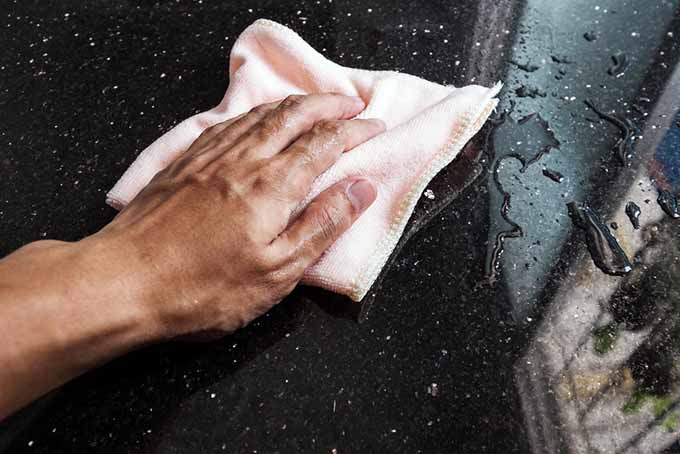
Điều này phụ thuộc vào cách sử dụng và môi trường của tấm đo. Chúng tôi khuyến nghị rằng một tấm đo mới hoặc phụ kiện đá granit chính xác cần được hiệu chuẩn lại toàn bộ trong vòng một năm kể từ khi mua. Nếu tấm đo đá granit được sử dụng nhiều, nên rút ngắn khoảng thời gian này xuống còn sáu tháng. Việc kiểm tra hàng tháng để phát hiện các lỗi đo lặp lại bằng thước đo độ nghiêng điện tử hoặc thiết bị tương tự sẽ cho thấy bất kỳ điểm mài mòn nào đang hình thành và chỉ mất vài phút để thực hiện. Sau khi xác định được kết quả của lần hiệu chuẩn đầu tiên, khoảng thời gian hiệu chuẩn có thể được kéo dài hoặc rút ngắn tùy theo quy định hoặc yêu cầu của hệ thống quản lý chất lượng nội bộ của bạn.
Chúng tôi có thể cung cấp dịch vụ giúp bạn kiểm tra và hiệu chỉnh tấm đá granit của mình.

Có một số nguyên nhân có thể dẫn đến sự khác biệt giữa các lần hiệu chuẩn:
- Bề mặt được rửa bằng dung dịch nóng hoặc lạnh trước khi hiệu chuẩn và không được để đủ thời gian để trở về trạng thái bình thường.
- Tấm đế được đỡ không đúng cách.
- Thay đổi nhiệt độ
- Bản nháp
- Ánh nắng trực tiếp hoặc nguồn nhiệt bức xạ khác chiếu vào bề mặt đĩa. Hãy đảm bảo rằng ánh sáng từ đèn chiếu từ trên cao không làm nóng bề mặt đĩa.
- Sự thay đổi về độ chênh lệch nhiệt độ theo chiều dọc giữa mùa đông và mùa hè (Nếu có thể, hãy biết độ chênh lệch nhiệt độ theo chiều dọc tại thời điểm hiệu chuẩn).
- Đĩa không có đủ thời gian để ổn định sau khi vận chuyển.
- Sử dụng thiết bị kiểm tra không đúng cách hoặc sử dụng thiết bị chưa được hiệu chuẩn.
- Sự thay đổi bề mặt do mài mòn
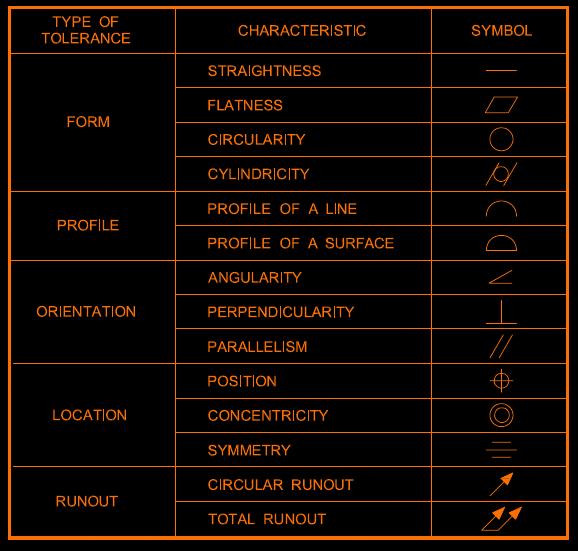
Đá granit chính xác có bao nhiêu loại lỗ?
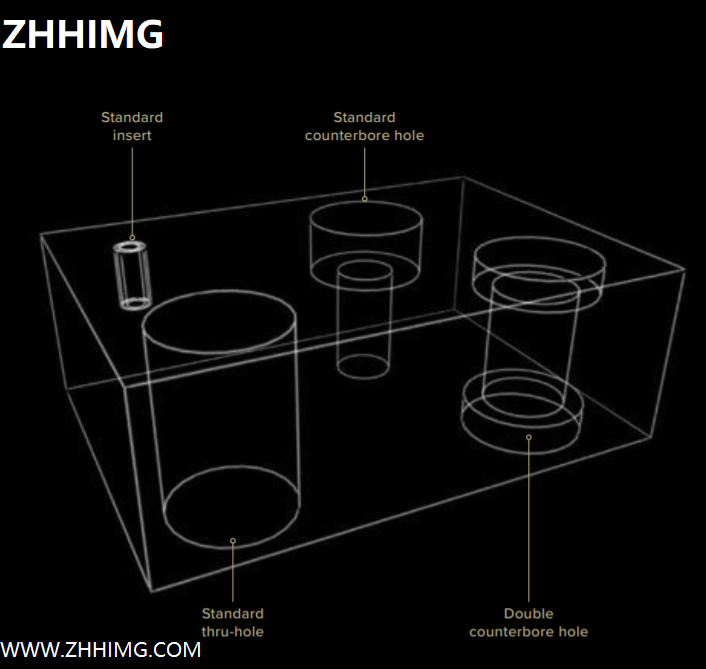
Các rãnh trên các thành phần đá granit chính xác
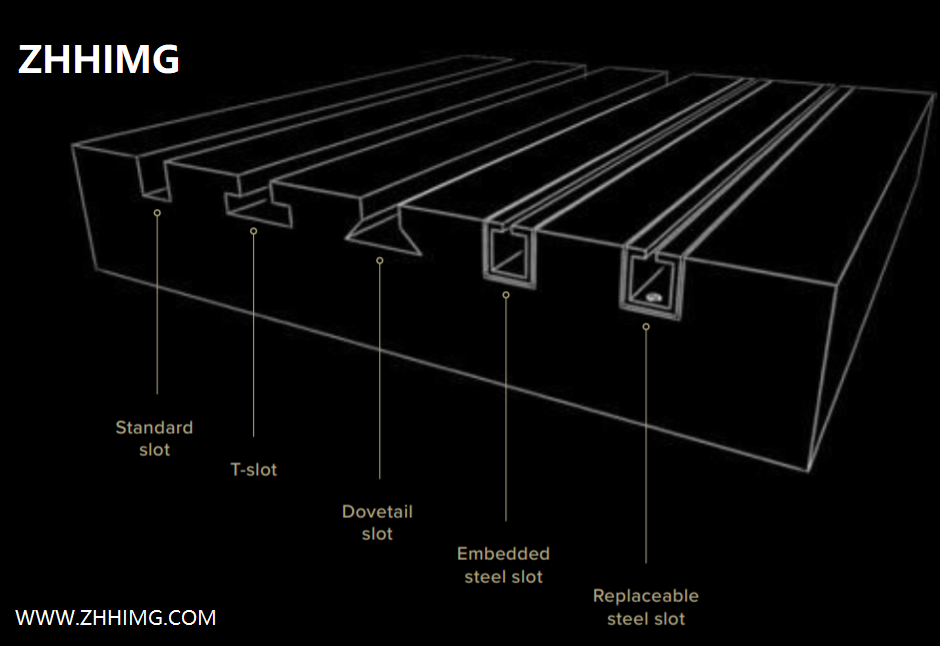
Đối với nhiều nhà máy, phòng kiểm tra và phòng thí nghiệm, các tấm đo độ phẳng bằng đá granit chính xác được sử dụng làm cơ sở cho các phép đo chính xác. Bởi vì mọi phép đo tuyến tính đều phụ thuộc vào một bề mặt tham chiếu chính xác để lấy kích thước cuối cùng, nên các tấm đo độ phẳng cung cấp mặt phẳng tham chiếu tốt nhất cho việc kiểm tra và bố trí công việc trước khi gia công. Chúng cũng là nền tảng lý tưởng để thực hiện các phép đo chiều cao và đo bề mặt. Hơn nữa, độ phẳng cao, độ ổn định, chất lượng tổng thể và tay nghề tốt khiến chúng trở thành lựa chọn tốt để lắp đặt các hệ thống đo lường cơ khí, điện tử và quang học phức tạp. Đối với bất kỳ quy trình đo lường nào trong số này, việc hiệu chuẩn các tấm đo độ phẳng là điều bắt buộc.
Đo lặp lại và độ phẳng
Cả độ phẳng và phép đo lặp lại đều rất quan trọng để đảm bảo độ chính xác của bề mặt. Độ phẳng có thể được hiểu là tất cả các điểm trên bề mặt nằm trong hai mặt phẳng song song, mặt phẳng đáy và mặt phẳng mái. Khoảng cách giữa hai mặt phẳng này chính là độ phẳng tổng thể của bề mặt. Phép đo độ phẳng này thường có dung sai và có thể bao gồm cả cấp độ.
Dung sai độ phẳng cho ba loại tiêu chuẩn được quy định trong tiêu chuẩn liên bang theo công thức sau:
Tiêu chuẩn DIN, tiêu chuẩn GB, tiêu chuẩn ASME, tiêu chuẩn JJS... mỗi quốc gia có tiêu chuẩn khác nhau...
Thông tin chi tiết hơn về tiêu chuẩn.
Ngoài độ phẳng, tính lặp lại cũng cần được đảm bảo. Phép đo lặp lại là phép đo độ phẳng cục bộ của các vùng nhất định. Đó là phép đo được thực hiện ở bất kỳ vị trí nào trên bề mặt tấm kim loại và sẽ lặp lại trong phạm vi dung sai cho phép. Việc kiểm soát độ phẳng cục bộ với dung sai chặt chẽ hơn so với độ phẳng tổng thể đảm bảo sự thay đổi dần dần trong biên dạng độ phẳng bề mặt, từ đó giảm thiểu sai số cục bộ.
Để đảm bảo tấm đế đáp ứng cả các thông số kỹ thuật về độ phẳng và độ chính xác đo lặp lại, các nhà sản xuất tấm đế đá granit nên sử dụng Tiêu chuẩn Liên bang GGG-P-463c làm cơ sở cho các thông số kỹ thuật của họ. Tiêu chuẩn này đề cập đến độ chính xác đo lặp lại, đặc tính vật liệu của đá granit làm tấm đế, độ hoàn thiện bề mặt, vị trí điểm đỡ, độ cứng, các phương pháp kiểm tra được chấp nhận và việc lắp đặt các chi tiết ren.
Kiểm tra độ chính xác của tấm
Bằng cách tuân theo một vài nguyên tắc đơn giản, khoản đầu tư vào một tấm đế phẳng bằng đá granit có thể sử dụng được trong nhiều năm. Tùy thuộc vào tần suất sử dụng tấm đế, môi trường xưởng và độ chính xác yêu cầu, tần suất kiểm tra độ chính xác của tấm đế sẽ khác nhau. Quy tắc chung là một tấm đế mới cần được hiệu chuẩn lại toàn bộ trong vòng một năm kể từ khi mua. Nếu tấm đế được sử dụng thường xuyên, nên rút ngắn khoảng thời gian này xuống còn sáu tháng.
Trước khi tấm đo độ phẳng bị mòn vượt quá tiêu chuẩn về độ phẳng tổng thể, nó sẽ xuất hiện các vết mòn hoặc gợn sóng. Việc kiểm tra hàng tháng các lỗi đo lặp lại bằng thước đo lặp lại sẽ giúp xác định các điểm mòn. Thước đo lặp lại là một dụng cụ có độ chính xác cao, phát hiện lỗi cục bộ và có thể hiển thị trên bộ khuếch đại điện tử có độ phóng đại cao.
Một chương trình kiểm tra hiệu quả cần bao gồm việc kiểm tra định kỳ bằng máy đo độ phẳng tự động, cung cấp hiệu chuẩn thực tế về độ phẳng tổng thể có thể truy溯 nguồn gốc đến Viện Tiêu chuẩn và Công nghệ Quốc gia (NIST). Việc hiệu chuẩn toàn diện bởi nhà sản xuất hoặc một công ty độc lập là cần thiết theo định kỳ.
Sự khác biệt giữa các lần hiệu chuẩn
Trong một số trường hợp, có sự khác biệt giữa các kết quả hiệu chuẩn tấm đo bề mặt. Đôi khi, các yếu tố như sự thay đổi bề mặt do mài mòn, sử dụng thiết bị kiểm tra không chính xác hoặc sử dụng thiết bị chưa được hiệu chuẩn có thể gây ra những sự khác biệt này. Tuy nhiên, hai yếu tố phổ biến nhất là nhiệt độ và giá đỡ.
Một trong những biến số quan trọng nhất là nhiệt độ. Ví dụ, bề mặt có thể đã được rửa bằng dung dịch nóng hoặc lạnh trước khi hiệu chuẩn và không có đủ thời gian để trở lại trạng thái bình thường. Các nguyên nhân khác gây thay đổi nhiệt độ bao gồm luồng gió lạnh hoặc nóng, ánh nắng trực tiếp, đèn chiếu từ trên cao hoặc các nguồn nhiệt bức xạ khác trên bề mặt tấm.
Cũng có thể có sự khác biệt về độ chênh lệch nhiệt độ theo chiều dọc giữa mùa đông và mùa hè. Trong một số trường hợp, tấm đo không được để đủ thời gian ổn định sau khi vận chuyển. Vì vậy, nên ghi lại độ chênh lệch nhiệt độ theo chiều dọc tại thời điểm hiệu chuẩn.
Một nguyên nhân phổ biến khác gây ra sự sai lệch trong hiệu chuẩn là do tấm chuẩn không được đỡ đúng cách. Tấm chuẩn cần được đỡ ở ba điểm, lý tưởng nhất là cách hai đầu tấm 20% chiều dài. Hai điểm đỡ nên được đặt cách cạnh dài 20% chiều rộng, và điểm đỡ còn lại nên được đặt ở giữa.
Chỉ có ba điểm có thể tựa chắc chắn trên bất kỳ bề mặt nào ngoại trừ bề mặt chính xác. Việc cố gắng đỡ tấm phẳng ở nhiều hơn ba điểm sẽ khiến tấm phẳng nhận được sự hỗ trợ từ nhiều tổ hợp ba điểm khác nhau, không phải là ba điểm mà nó được đỡ trong quá trình sản xuất. Điều này sẽ gây ra sai sót khi tấm phẳng bị biến dạng để phù hợp với cách bố trí hỗ trợ mới. Hãy cân nhắc sử dụng giá đỡ bằng thép với các thanh đỡ được thiết kế để thẳng hàng với các điểm đỡ thích hợp. Các giá đỡ cho mục đích này thường có sẵn từ nhà sản xuất tấm phẳng.
Nếu tấm đế được đỡ đúng cách, việc cân bằng chính xác chỉ cần thiết nếu ứng dụng yêu cầu. Việc cân bằng không cần thiết để duy trì độ chính xác của một tấm đế được đỡ đúng cách.
Kéo dài tuổi thọ đĩa
Tuân thủ một vài nguyên tắc sẽ giúp giảm mài mòn bề mặt tấm đá granit và cuối cùng, kéo dài tuổi thọ của nó.
Đầu tiên, điều quan trọng là phải giữ cho tấm đế sạch sẽ. Bụi mài mòn trong không khí thường là nguồn gây mài mòn lớn nhất trên tấm đế, vì nó có xu hướng bám vào các chi tiết gia công và bề mặt tiếp xúc của các dụng cụ đo.
Việc che chắn các tấm kim loại để bảo vệ chúng khỏi bụi bẩn và hư hại cũng rất quan trọng. Tuổi thọ của sản phẩm có thể được kéo dài bằng cách che chắn tấm kim loại khi không sử dụng.
Xoay tấm đế định kỳ để tránh việc một khu vực bị sử dụng quá mức. Ngoài ra, nên thay thế các miếng đệm tiếp xúc bằng thép trên thiết bị đo bằng miếng đệm cacbua.
Tránh đặt thức ăn hoặc nước ngọt lên đĩa. Nhiều loại nước ngọt có chứa axit cacbonic hoặc axit photphoric, có thể hòa tan các khoáng chất mềm hơn và để lại những vết lõm nhỏ trên bề mặt.
Nơi tái phát
Khi cần mài lại bề mặt tấm đá granit, hãy cân nhắc xem nên thực hiện dịch vụ này tại chỗ hay tại cơ sở hiệu chuẩn. Tốt nhất là nên mài lại tấm đá tại nhà máy hoặc cơ sở chuyên dụng. Tuy nhiên, nếu tấm đá không bị mòn quá nhiều, thường nằm trong phạm vi dung sai 0,001 inch so với yêu cầu, thì có thể mài lại tại chỗ. Nếu tấm đá bị mòn đến mức vượt quá dung sai 0,001 inch, hoặc bị rỗ hoặc sứt mẻ nghiêm trọng, thì nên gửi đến nhà máy để mài trước khi mài lại.
Cơ sở hiệu chuẩn có trang thiết bị và điều kiện nhà máy tối ưu hóa điều kiện cần thiết để hiệu chuẩn tấm đúng cách và sửa chữa nếu cần.
Cần hết sức cẩn trọng khi lựa chọn kỹ thuật viên hiệu chuẩn và đánh bóng bề mặt đá tại chỗ. Hãy yêu cầu chứng chỉ và xác minh thiết bị mà kỹ thuật viên sẽ sử dụng có quy trình hiệu chuẩn có thể truy xuất nguồn gốc. Kinh nghiệm cũng là một yếu tố quan trọng, vì cần nhiều năm để học cách đánh bóng đá granit chính xác.
Các phép đo quan trọng bắt đầu bằng việc sử dụng một tấm chuẩn bằng đá granit chính xác làm điểm chuẩn. Bằng cách đảm bảo điểm tham chiếu đáng tin cậy thông qua việc sử dụng tấm chuẩn được hiệu chuẩn đúng cách, các nhà sản xuất có được một trong những công cụ thiết yếu để thực hiện các phép đo đáng tin cậy và tạo ra các bộ phận chất lượng tốt hơn.Q
Danh sách kiểm tra các sai lệch hiệu chuẩn
1. Bề mặt được rửa bằng dung dịch nóng hoặc lạnh trước khi hiệu chuẩn và không được để đủ thời gian để trở về trạng thái bình thường.
2. Tấm đế không được đỡ đúng cách.
3. Thay đổi nhiệt độ.
4. Bản nháp.
5. Ánh nắng trực tiếp hoặc nguồn nhiệt bức xạ khác chiếu vào bề mặt đĩa. Hãy chắc chắn rằng ánh sáng từ trên cao không làm nóng bề mặt.
6. Sự thay đổi độ chênh lệch nhiệt độ theo chiều dọc giữa mùa đông và mùa hè. Nếu có thể, hãy biết độ chênh lệch nhiệt độ theo chiều dọc tại thời điểm thực hiện hiệu chuẩn.
7. Đĩa không được để đủ thời gian ổn định sau khi vận chuyển.
8. Sử dụng thiết bị kiểm tra không đúng cách hoặc sử dụng thiết bị chưa được hiệu chuẩn.
9. Sự thay đổi bề mặt do mài mòn.
Mẹo công nghệ
- Vì mọi phép đo tuyến tính đều phụ thuộc vào một mặt phẳng tham chiếu chính xác để lấy kích thước cuối cùng, nên các tấm đo bề mặt cung cấp mặt phẳng tham chiếu tốt nhất để kiểm tra và bố trí vật liệu trước khi gia công.
- Việc kiểm soát độ phẳng cục bộ với dung sai chặt chẽ hơn so với độ phẳng tổng thể đảm bảo sự thay đổi dần dần trong cấu hình độ phẳng bề mặt, nhờ đó giảm thiểu sai sót cục bộ.
- Một chương trình kiểm tra hiệu quả cần bao gồm việc kiểm tra định kỳ bằng máy đo độ phẳng tự động, cung cấp thông tin hiệu chuẩn thực tế về độ phẳng tổng thể có thể truy xuất nguồn gốc đến Cơ quan Kiểm định Quốc gia.
Trong các khoáng chất cấu tạo nên đá granit, hơn 90% là fenspat và thạch anh, trong đó fenspat chiếm tỷ lệ cao nhất. Fenspat thường có màu trắng, xám và đỏ nhạt, còn thạch anh chủ yếu không màu hoặc trắng xám, tạo nên màu sắc cơ bản của đá granit. Fenspat và thạch anh là những khoáng chất cứng, khó có thể di chuyển bằng dao thép. Về các đốm đen trong đá granit, chủ yếu là mica đen, ngoài ra còn có một số khoáng chất khác. Mặc dù biotit tương đối mềm, nhưng khả năng chịu lực của nó không yếu, đồng thời lại chiếm một lượng nhỏ trong đá granit, thường dưới 10%. Đây chính là điều kiện vật liệu khiến đá granit đặc biệt bền chắc.
Một lý do khác khiến đá granit rất chắc chắn là các hạt khoáng chất của nó liên kết chặt chẽ với nhau và lồng vào nhau. Các lỗ rỗng thường chỉ chiếm chưa đến 1% tổng thể tích của đá. Điều này giúp đá granit có khả năng chịu được áp lực lớn và không dễ bị thấm nước.
Các chi tiết bằng đá granit được làm từ đá không gỉ, có khả năng chống axit và kiềm, chống mài mòn tốt và tuổi thọ cao, không cần bảo dưỡng đặc biệt. Các chi tiết chính xác bằng đá granit chủ yếu được sử dụng trong chế tạo dụng cụ của ngành công nghiệp cơ khí. Do đó, chúng được gọi là các chi tiết chính xác bằng đá granit hoặc các chi tiết bằng đá granit. Đặc điểm của các chi tiết chính xác bằng đá granit về cơ bản giống với các chi tiết bằng đá granit. Giới thiệu về chế tạo dụng cụ và đo lường các chi tiết chính xác bằng đá granit: Công nghệ gia công chính xác và gia công vi mô là những hướng phát triển quan trọng của ngành công nghiệp chế tạo cơ khí, và chúng đã trở thành một chỉ số quan trọng để đánh giá trình độ công nghệ cao. Sự phát triển của công nghệ tiên tiến và ngành công nghiệp quốc phòng không thể tách rời khỏi công nghệ gia công chính xác và gia công vi mô. Các chi tiết bằng đá granit có thể trượt trơn tru trong quá trình đo lường mà không bị kẹt. Đo lường bề mặt làm việc, các vết xước thông thường không ảnh hưởng đến độ chính xác đo lường. Các chi tiết bằng đá granit cần được thiết kế và sản xuất theo yêu cầu của phía người đặt hàng.
Lĩnh vực ứng dụng:
Như chúng ta đã biết, ngày càng nhiều máy móc và thiết bị lựa chọn các bộ phận bằng đá granit chính xác.
Các bộ phận bằng đá granit được sử dụng cho chuyển động linh hoạt, động cơ tuyến tính, máy đo tọa độ (CMM), máy CNC, máy cắt laser...
Vui lòng liên hệ với chúng tôi để biết thêm thông tin.
Các thiết bị đo lường và các bộ phận cơ khí bằng đá granit được chế tạo từ đá granit đen Tế Nam chất lượng cao. Nhờ độ chính xác cao, tuổi thọ dài, độ ổn định tốt và khả năng chống ăn mòn, chúng ngày càng được sử dụng rộng rãi trong việc kiểm tra sản phẩm của ngành công nghiệp hiện đại và các lĩnh vực khoa học như cơ khí hàng không vũ trụ và nghiên cứu khoa học.
Thuận lợi
Cứng gấp đôi gang;
----Sự thay đổi kích thước tối thiểu là do sự thay đổi nhiệt độ;
Không bị vắt, nên không làm gián đoạn công việc;
Không có gờ hoặc chỗ lồi lõm nhờ cấu trúc hạt mịn và độ bám dính không đáng kể, đảm bảo độ phẳng cao trong suốt thời gian sử dụng lâu dài và không gây hư hại cho các bộ phận hoặc dụng cụ khác;
Hoạt động không gặp sự cố khi sử dụng với vật liệu từ tính;
Tuổi thọ cao và không bị gỉ sét, dẫn đến chi phí bảo trì thấp.
Các tấm đá granit bề mặt chính xác được mài phẳng đến độ chính xác cao để đạt được độ chuẩn xác và được sử dụng làm đế để lắp đặt các hệ thống đo lường cơ khí, điện tử và quang học phức tạp.
Một số đặc điểm độc đáo của tấm đá granit:
Độ cứng đồng đều;
Chính xác trong điều kiện tải;
Hấp thụ rung động;
Dễ dàng vệ sinh;
Chống quấn;
Độ xốp thấp;
Không gây mài mòn;
Không từ tính
Ưu điểm của tấm bề mặt đá granit
Thứ nhất, sau một thời gian dài trải qua quá trình lão hóa tự nhiên, đá có cấu trúc đồng nhất, hệ số giãn nở tối thiểu, ứng suất bên trong hoàn toàn biến mất, không bị biến dạng, do đó độ chính xác cao.
Thứ hai, sẽ không có vết xước, ngay cả trong điều kiện nhiệt độ không đổi, ở nhiệt độ phòng vẫn có thể duy trì độ chính xác của phép đo nhiệt độ.
Thứ ba, không bị từ hóa, phép đo có thể chuyển động trơn tru, không có cảm giác kêu cót két, không bị ảnh hưởng bởi độ ẩm, mặt phẳng được cố định.
Thứ tư, độ cứng tốt, độ bền cao, khả năng chống mài mòn mạnh.
Thứ năm, không sợ axit, kiềm ăn mòn, không bị gỉ sét, không cần sơn dầu, không dễ bám bụi mịn, dễ bảo trì, tuổi thọ cao.
Tại sao nên chọn đế máy bằng đá granit thay vì đế máy bằng gang?
1. Đế máy bằng đá granit có thể duy trì độ chính xác cao hơn so với đế máy bằng gang. Đế máy bằng gang dễ bị ảnh hưởng bởi nhiệt độ và độ ẩm, nhưng đế máy bằng đá granit thì không;
2. Với cùng kích thước đế máy bằng đá granit và đế máy bằng gang, đế máy bằng đá granit tiết kiệm chi phí hơn so với đế máy bằng gang;
3. Đế máy bằng đá granit đặc biệt dễ gia công hơn so với đế máy bằng gang.
Các tấm chuẩn độ bằng đá granit là những dụng cụ quan trọng trong các phòng thí nghiệm kiểm tra trên khắp cả nước. Bề mặt phẳng tuyệt đối, được hiệu chuẩn của tấm chuẩn độ cho phép các chuyên gia kiểm tra sử dụng chúng làm chuẩn tham chiếu để kiểm tra linh kiện và hiệu chuẩn dụng cụ. Nếu không có độ ổn định do tấm chuẩn độ mang lại, việc sản xuất chính xác nhiều linh kiện có dung sai chặt chẽ trong các lĩnh vực công nghệ và y tế sẽ khó khăn hơn rất nhiều, thậm chí là không thể. Tất nhiên, để sử dụng một khối đá granit làm chuẩn độ và kiểm tra các vật liệu và dụng cụ khác, độ chính xác của chính đá granit đó phải được đánh giá. Người dùng có thể hiệu chuẩn tấm chuẩn độ bằng đá granit để đảm bảo độ chính xác của nó.
Làm sạch bề mặt đá granit trước khi hiệu chuẩn. Đổ một lượng nhỏ dung dịch làm sạch bề mặt lên một miếng vải mềm, sạch và lau bề mặt đá granit. Lau khô ngay lập tức dung dịch làm sạch trên bề mặt bằng một miếng vải khô khác. Không để dung dịch làm sạch tự khô.
Đặt thước đo lặp lại vào chính giữa tấm đá granit.
Đặt thước đo lặp lại về vị trí số 0 so với bề mặt tấm đá granit.
Từ từ di chuyển thước đo trên bề mặt đá granit. Quan sát kim chỉ thị của thước đo và ghi lại các đỉnh của bất kỳ sự thay đổi độ cao nào khi bạn di chuyển dụng cụ trên tấm đá.
So sánh sự biến thiên độ phẳng trên bề mặt tấm với dung sai cho tấm đo độ phẳng của bạn, dung sai này thay đổi tùy thuộc vào kích thước tấm và cấp độ phẳng của đá granit. Tham khảo tiêu chuẩn liên bang GGG-P-463c (xem Tài nguyên) để xác định xem tấm của bạn có đáp ứng các yêu cầu về độ phẳng đối với kích thước và cấp độ của nó hay không. Sự chênh lệch giữa điểm cao nhất và điểm thấp nhất trên tấm chính là phép đo độ phẳng của nó.
Kiểm tra xem các biến thiên độ sâu lớn nhất trên bề mặt tấm có nằm trong phạm vi thông số kỹ thuật về độ lặp lại đối với tấm có kích thước và cấp độ đó hay không. Tham khảo tiêu chuẩn liên bang GGG-P-463c (xem Tài nguyên) để xác định xem tấm của bạn có đáp ứng các yêu cầu về độ lặp lại đối với kích thước của nó hay không. Loại bỏ tấm bề mặt nếu ngay cả một điểm duy nhất không đáp ứng yêu cầu về độ lặp lại.
Ngừng sử dụng tấm đá granite không đáp ứng các yêu cầu của liên bang. Trả lại tấm đá cho nhà sản xuất hoặc công ty chuyên xử lý bề mặt đá granite để được đánh bóng lại cho đạt tiêu chuẩn.
Mẹo
Nên tiến hành hiệu chuẩn chính thức ít nhất một lần mỗi năm, mặc dù các tấm bề mặt bằng đá granit được sử dụng nhiều nên được hiệu chuẩn thường xuyên hơn.
Việc hiệu chuẩn chính thức, có thể ghi chép được trong môi trường sản xuất hoặc kiểm tra thường được thực hiện bởi bộ phận đảm bảo chất lượng hoặc nhà cung cấp dịch vụ hiệu chuẩn bên ngoài, mặc dù bất kỳ ai cũng có thể sử dụng thiết bị đo lặp lại để kiểm tra bề mặt tấm đo một cách không chính thức trước khi sử dụng.
Lịch sử ban đầu của các tấm đá granit
Trước Thế chiến II, các nhà sản xuất sử dụng tấm thép phẳng để kiểm tra kích thước các bộ phận. Trong Thế chiến II, nhu cầu về thép tăng lên đáng kể, và rất nhiều tấm thép phẳng đã bị nấu chảy. Cần tìm vật liệu thay thế, và đá granit trở thành lựa chọn hàng đầu nhờ các đặc tính đo lường vượt trội của nó.
Một số ưu điểm của đá granit so với thép đã trở nên rõ ràng. Đá granit cứng hơn, mặc dù giòn hơn và dễ bị sứt mẻ. Có thể mài phẳng đá granit nhanh hơn và chính xác hơn nhiều so với thép. Đá granit cũng có đặc tính ưu việt là hệ số giãn nở nhiệt thấp hơn so với thép. Hơn nữa, nếu một tấm thép cần sửa chữa, nó phải được cạo thủ công bởi những người thợ lành nghề, những người cũng áp dụng kỹ năng của họ trong việc sửa chữa máy công cụ.
Ngoài ra, cần lưu ý rằng một số tấm thép định hình vẫn còn được sử dụng cho đến ngày nay.
Đặc tính đo lường của tấm đá granit
Đá granit là một loại đá magma được hình thành do phun trào núi lửa. Ngược lại, đá cẩm thạch là đá vôi biến chất. Để sử dụng trong đo lường, đá granit được chọn phải đáp ứng các yêu cầu cụ thể được nêu trong Tiêu chuẩn Liên bang GGG-P-463c, từ nay gọi tắt là Fed Specs, và cụ thể là Phần 3.1 3.1 Trong số các tiêu chuẩn Fed Specs, đá granit phải có kết cấu hạt mịn đến trung bình.
Đá granit là một loại vật liệu cứng, nhưng độ cứng của nó thay đổi vì nhiều lý do. Một kỹ thuật viên chuyên nghiệp về đá granit có thể ước tính độ cứng dựa trên màu sắc của nó, vốn là dấu hiệu cho biết hàm lượng thạch anh. Độ cứng của đá granit được xác định một phần bởi hàm lượng thạch anh và sự thiếu hụt mica. Đá granit đỏ và hồng thường cứng nhất, đá granit xám có độ cứng trung bình, và đá granit đen mềm nhất.
Mô đun đàn hồi Young được sử dụng để thể hiện độ dẻo hoặc độ cứng của đá. Đá granit hồng có giá trị trung bình từ 3-5 điểm trên thang đo, đá granit xám từ 5-7 điểm và đá granit đen từ 7-10 điểm. Số càng nhỏ, đá granit càng cứng. Số càng lớn, đá granit càng mềm và dẻo hơn. Việc biết độ cứng của đá granit rất quan trọng khi lựa chọn độ dày cần thiết cho các cấp dung sai và trọng lượng của các bộ phận và dụng cụ đo đặt lên trên đó.
Ngày xưa, khi còn là những người thợ máy thực thụ, nổi tiếng với những cuốn sổ tay bảng lượng giác luôn mang trong túi áo, đá granit đen được coi là "tốt nhất". "Tốt nhất" được định nghĩa là loại đá có khả năng chống mài mòn cao nhất hoặc cứng nhất. Một nhược điểm là đá granit cứng hơn thường dễ bị sứt mẻ hoặc móp méo. Các thợ máy tin chắc rằng đá granit đen là tốt nhất đến nỗi một số nhà sản xuất đá granit hồng đã nhuộm chúng thành màu đen.
Tôi đã tận mắt chứng kiến một tấm đá bị rơi khỏi xe nâng khi đang được di chuyển từ kho. Tấm đá rơi xuống sàn và vỡ làm đôi, để lộ màu hồng thật sự bên trong. Hãy cẩn thận nếu bạn có ý định mua đá granite đen từ Trung Quốc. Chúng tôi khuyên bạn nên sử dụng tiền của mình vào việc khác. Độ cứng của một tấm đá granite có thể không đồng đều. Một vệt thạch anh có thể cứng hơn nhiều so với phần còn lại của bề mặt tấm đá. Một lớp gabbro đen có thể làm cho một khu vực mềm hơn nhiều. Các kỹ thuật viên sửa chữa bề mặt đá được đào tạo bài bản và giàu kinh nghiệm biết cách xử lý những khu vực mềm này.
Các loại tấm bề mặt
Có bốn cấp độ tấm phẳng. Cấp độ phòng thí nghiệm AA và A, cấp độ kiểm tra phòng B, và cấp độ xưởng. Cấp độ AA và A là phẳng nhất với dung sai độ phẳng tốt hơn 0,00001 inch đối với tấm cấp AA. Cấp độ xưởng có độ phẳng thấp nhất và như tên gọi cho thấy, chúng được dùng trong các phòng dụng cụ. Trong khi đó, cấp độ AA, cấp độ A và cấp độ B được dùng trong phòng thí nghiệm kiểm tra hoặc kiểm soát chất lượng.
PKiểm tra đúng cách để hiệu chuẩn tấm bề mặt
Tôi luôn nói với khách hàng của mình rằng tôi có thể dạy bất kỳ đứa trẻ 10 tuổi nào trong nhà thờ của tôi cách kiểm tra một tấm kim loại chỉ trong vài ngày. Việc đó không khó. Tuy nhiên, nó đòi hỏi một số kỹ thuật để thực hiện công việc nhanh chóng, những kỹ thuật mà người ta học được qua thời gian và nhiều lần lặp lại. Tôi cần phải thông báo cho các bạn, và tôi không thể nhấn mạnh đủ, Tiêu chuẩn Liên bang GGG-P-463c KHÔNG PHẢI là quy trình hiệu chuẩn! Chi tiết hơn sẽ được đề cập sau.
Việc hiệu chuẩn độ phẳng tổng thể (độ phẳng trung bình) và kiểm tra độ lặp lại (mòn cục bộ) là bắt buộc theo tiêu chuẩn của Liên bang. Ngoại lệ duy nhất là đối với các tấm nhỏ, chỉ cần kiểm tra độ lặp lại.
Ngoài ra, và cũng quan trọng không kém các thử nghiệm khác, là thử nghiệm về độ chênh lệch nhiệt độ. (Xem Delta T bên dưới)
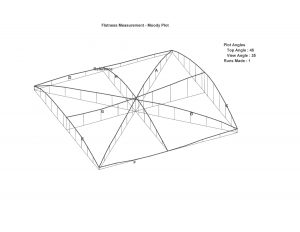
Hình 1
Kiểm tra độ phẳng có 4 phương pháp được chấp thuận. Đó là máy thủy bình điện tử, máy tự chuẩn trực, máy laser và thiết bị định vị mặt phẳng. Chúng tôi chỉ sử dụng máy thủy bình điện tử vì đây là phương pháp chính xác và nhanh nhất vì nhiều lý do.
Máy laser và máy tự chuẩn trực sử dụng một chùm tia sáng rất thẳng làm tham chiếu. Người ta đo độ thẳng của một tấm đá granit bằng cách so sánh sự thay đổi khoảng cách giữa tấm đá và chùm tia sáng. Bằng cách chiếu một chùm tia sáng thẳng vào một mục tiêu phản xạ trong khi di chuyển mục tiêu phản xạ dọc theo tấm đá, khoảng cách giữa chùm tia phát ra và chùm tia phản xạ trở lại chính là phép đo độ thẳng.
Vấn đề của phương pháp này là ở chỗ: mục tiêu và nguồn sáng bị ảnh hưởng bởi rung động, nhiệt độ môi trường, bề mặt mục tiêu không phẳng hoặc bị trầy xước, ô nhiễm trong không khí và chuyển động của không khí (dòng chảy). Tất cả những yếu tố này đều góp phần tạo ra sai số bổ sung. Hơn nữa, sai số do người vận hành khi kiểm tra bằng máy đo chuẩn trực còn lớn hơn.
Người sử dụng máy đo góc tự động có kinh nghiệm có thể thực hiện các phép đo rất chính xác nhưng vẫn gặp vấn đề về tính nhất quán của các kết quả đo, đặc biệt là ở khoảng cách xa hơn vì các phản xạ có xu hướng mở rộng hoặc trở nên hơi mờ. Ngoài ra, mục tiêu không hoàn toàn phẳng và việc nhìn qua thấu kính trong thời gian dài cũng tạo ra thêm sai số.
Thiết bị định vị mặt phẳng là một ý tưởng ngớ ngẩn. Thiết bị này sử dụng một thanh tương đối thẳng (so với chùm tia sáng thẳng tắp hoặc tia laser) làm tham chiếu. Không chỉ thiết bị cơ khí này sử dụng một chỉ thị thường chỉ có độ phân giải 20 µinch mà độ không thẳng của thanh và sự khác biệt về vật liệu cũng góp phần đáng kể vào sai số đo. Theo ý kiến của chúng tôi, mặc dù phương pháp này có thể chấp nhận được, nhưng không một phòng thí nghiệm nào có năng lực lại sử dụng thiết bị định vị mặt phẳng làm dụng cụ kiểm tra cuối cùng.
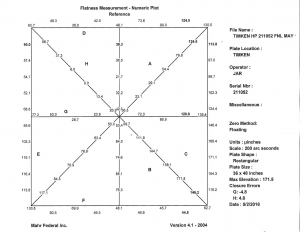
Máy thủy bình điện tử sử dụng trọng lực làm chuẩn. Máy thủy bình điện tử vi sai không bị ảnh hưởng bởi rung động. Chúng có độ phân giải thấp tới 0,1 giây cung và các phép đo nhanh, chính xác và rất ít sai số do người vận hành có kinh nghiệm gây ra. Cả máy định vị mặt phẳng lẫn máy tự chuẩn trực đều không cung cấp bản đồ địa hình (Hình 1) hoặc bản đồ đẳng cự (Hình 2) do máy tính tạo ra của bề mặt.
Hình 2
Kiểm tra độ phẳng thích hợp của bề mặt
Việc kiểm tra độ phẳng bề mặt đúng cách là một phần quan trọng của bài viết này đến nỗi tôi đáng lẽ phải đặt nó ở đầu bài. Như đã nêu trước đó, Tiêu chuẩn Liên bang GGG-p-463c KHÔNG phải là phương pháp hiệu chuẩn. Nó đóng vai trò là hướng dẫn cho nhiều khía cạnh của đá granit cấp đo lường mà người mua dự định là bất kỳ Cơ quan Chính phủ Liên bang nào, và điều đó bao gồm các phương pháp thử nghiệm và dung sai hoặc cấp độ. Nếu nhà thầu tuyên bố họ tuân thủ Tiêu chuẩn Liên bang, thì giá trị độ phẳng sẽ được xác định bằng Phương pháp Moody.
Moody là một người từ những năm 1950 đã nghĩ ra một phương pháp toán học để xác định độ phẳng tổng thể và tính đến hướng của các đường kiểm tra, xem chúng có đủ gần nhau trên cùng một mặt phẳng hay không. Mọi thứ vẫn không thay đổi. Tạp chí Allied Signal đã cố gắng cải tiến phương pháp toán học này nhưng kết luận rằng sự khác biệt quá nhỏ nên không đáng để tốn công sức.
Nếu nhà thầu thi công mặt phẳng sử dụng thước thủy điện tử hoặc laser, họ sẽ sử dụng máy tính để hỗ trợ tính toán. Nếu không có sự hỗ trợ của máy tính, kỹ thuật viên sử dụng phương pháp tự chuẩn trực phải tính toán các số liệu bằng tay. Trên thực tế, họ không làm vậy. Việc đó mất quá nhiều thời gian và thành thật mà nói, có thể quá khó khăn. Trong thử nghiệm độ phẳng bằng phương pháp Moody, kỹ thuật viên kiểm tra độ thẳng của tám đường thẳng theo hình cờ Anh.
Phương pháp Moody
Phương pháp Moody là một cách toán học để xác định xem tám đường thẳng có nằm trên cùng một mặt phẳng hay không. Nói cách khác, bạn chỉ có 8 đường thẳng có thể nằm trên hoặc gần cùng một mặt phẳng hoặc không. Hơn nữa, một nhà thầu tuyên bố tuân thủ Tiêu chuẩn Liên bang (Fed Spec) và sử dụng phương pháp tự hiệu chỉnh (autocollimation), anh ta...phảiTạo ra tám trang dữ liệu. Mỗi trang dành cho một dòng được kiểm tra để chứng minh việc kiểm tra, sửa chữa hoặc cả hai. Nếu không, nhà thầu sẽ không biết giá trị độ phẳng thực sự là bao nhiêu.
Tôi chắc chắn rằng nếu bạn là một trong những người nhờ nhà thầu hiệu chỉnh tấm đo bằng phương pháp tự chuẩn trực, bạn chưa từng thấy những trang này! Hình 3 là một ví dụ về...chỉ mộtCần tám trang để tính toán độ bằng phẳng tổng thể. Một dấu hiệu của sự thiếu hiểu biết và ác ý là nếu báo cáo của bạn có những con số được làm tròn. Ví dụ: 200, 400, 650, v.v. Một giá trị được tính toán chính xác là một số thực. Ví dụ: 325,4 µm. Khi nhà thầu sử dụng Phương pháp tính toán Moody và kỹ thuật viên tính toán các giá trị bằng tay, bạn sẽ nhận được tám trang tính toán và một biểu đồ đẳng cự. Biểu đồ đẳng cự thể hiện độ cao khác nhau dọc theo các đường khác nhau và khoảng cách giữa các điểm giao nhau được chọn.
Hình 3(Phải mất tám trang như thế này để tính toán độ phẳng thủ công. Hãy nhớ hỏi lý do tại sao bạn không nhận được kết quả này nếu nhà thầu của bạn sử dụng phương pháp tự động hiệu chỉnh!)
Hình 4
Các kỹ thuật viên đo kích thước sử dụng thước thủy vi sai (Hình 4) làm thiết bị ưu tiên để đo những thay đổi nhỏ về góc độ từ trạm đo này sang trạm đo khác. Thước thủy có độ phân giải xuống đến 0,1 giây cung (5 µ inch khi sử dụng bàn trượt 4 inch), cực kỳ ổn định, không bị ảnh hưởng bởi rung động, khoảng cách đo, luồng không khí, sự mệt mỏi của người vận hành, ô nhiễm không khí hoặc bất kỳ vấn đề nào vốn có ở các thiết bị khác. Thêm sự hỗ trợ của máy tính, công việc trở nên tương đối nhanh chóng, tạo ra các biểu đồ địa hình và đẳng cự chứng minh việc xác minh và quan trọng nhất là việc sửa chữa.
Một bài kiểm tra độ lặp lại thích hợp
Kiểm tra độ lặp lại hay khả năng đọc lại là thử nghiệm quan trọng nhất. Thiết bị chúng tôi sử dụng để thực hiện thử nghiệm độ lặp lại bao gồm một bộ gá đọc lặp lại, một LVDT và một bộ khuếch đại cần thiết cho các phép đo có độ phân giải cao. Chúng tôi thiết lập bộ khuếch đại LVDT ở độ phân giải tối thiểu là 10 µInch hoặc 5 µInch đối với các tấm có độ chính xác cao.
Việc sử dụng đồng hồ đo cơ học với độ phân giải chỉ 20 µInch là vô ích nếu bạn đang cố gắng kiểm tra yêu cầu độ lặp lại là 35 µInch. Đồng hồ đo có độ không chắc chắn là 40 µInch! Cấu hình đọc lặp lại mô phỏng cấu hình thước đo chiều cao/chi tiết.
Tính lặp lại KHÔNG giống với độ phẳng tổng thể (Mặt phẳng trung bình). Tôi thích coi tính lặp lại trong đá granit như một phép đo bán kính nhất quán.
Hình 5
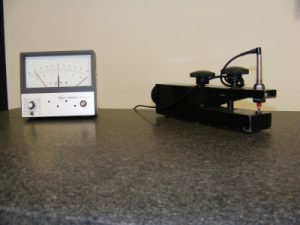
Nếu bạn kiểm tra tính lặp lại của một quả cầu tròn, thì bạn đã chứng minh được bán kính của quả cầu không thay đổi. (Hình dạng lý tưởng của một tấm đá được sửa chữa đúng cách là hình vòm lồi.) Tuy nhiên, rõ ràng là quả cầu không phẳng. Nói đúng hơn là gần phẳng. Trên một khoảng cách cực ngắn, nó phẳng. Vì phần lớn công việc kiểm tra liên quan đến việc sử dụng thước đo chiều cao rất gần với chi tiết, nên tính lặp lại trở thành đặc tính quan trọng nhất của một tấm đá granit. Nó quan trọng hơn độ phẳng tổng thể trừ khi người dùng đang kiểm tra độ thẳng của một chi tiết dài.
Hãy chắc chắn rằng nhà thầu của bạn thực hiện kiểm tra đọc lại. Một tấm có thể có kết quả đọc lại lệch đáng kể so với dung sai nhưng vẫn vượt qua bài kiểm tra độ phẳng! Điều đáng ngạc nhiên là một phòng thí nghiệm có thể được công nhận về kiểm tra mà không bao gồm kiểm tra đọc lại. Một phòng thí nghiệm không thể sửa chữa hoặc không giỏi sửa chữa thường chỉ thích thực hiện kiểm tra độ phẳng. Độ phẳng hiếm khi thay đổi trừ khi bạn di chuyển tấm.
Kiểm tra độ lặp lại là phương pháp dễ thực hiện nhất nhưng lại khó đạt được nhất khi mài phẳng bề mặt. Hãy chắc chắn rằng nhà thầu của bạn có thể khôi phục độ lặp lại mà không làm lõm bề mặt hoặc tạo ra các gợn sóng trên bề mặt.
Kiểm tra Delta T
Bài kiểm tra này bao gồm việc đo nhiệt độ THỰC TẾ của đá ở bề mặt trên và bề mặt dưới, sau đó tính toán sự chênh lệch, Delta T, để ghi vào chứng nhận.
Điều quan trọng cần biết là hệ số giãn nở nhiệt trung bình của đá granit là 3,5 μIn/Inch/độ. Ảnh hưởng của nhiệt độ môi trường và độ ẩm lên tấm đá granit là không đáng kể. Tuy nhiên, bề mặt tấm đá có thể bị lệch khỏi dung sai hoặc đôi khi được cải thiện ngay cả khi chênh lệch nhiệt độ (Delta T) chỉ từ 0,3 đến 0,5 độ F. Cần phải biết liệu Delta T có nằm trong phạm vi 0,12 độ F so với sự chênh lệch từ lần hiệu chuẩn cuối cùng hay không.
Điều quan trọng cần biết là bề mặt làm việc của tấm đo có xu hướng dịch chuyển về phía nhiệt. Nếu nhiệt độ mặt trên cao hơn mặt dưới, thì mặt trên sẽ nổi lên. Nếu mặt dưới cao hơn, điều này rất hiếm, thì mặt trên sẽ chìm xuống. Đối với người quản lý chất lượng hoặc kỹ thuật viên, việc biết tấm đo phẳng và có độ lặp lại tốt tại thời điểm hiệu chuẩn hoặc sửa chữa là chưa đủ, mà cần phải biết độ chênh lệch nhiệt độ (Delta T) của nó tại thời điểm kiểm tra hiệu chuẩn cuối cùng. Trong những trường hợp khẩn cấp, người dùng có thể tự đo Delta T để xác định xem tấm đo có bị lệch dung sai hay không chỉ do sự thay đổi Delta T. May mắn thay, đá granit cần nhiều giờ hoặc thậm chí nhiều ngày để thích nghi với môi trường. Những dao động nhỏ về nhiệt độ môi trường xung quanh trong suốt cả ngày sẽ không ảnh hưởng đến nó. Vì những lý do này, chúng tôi không báo cáo nhiệt độ hoặc độ ẩm môi trường xung quanh khi hiệu chuẩn vì ảnh hưởng của chúng là không đáng kể.
Tấm đá granit bị mài mòn
Mặc dù đá granit cứng hơn tấm thép, nhưng bề mặt đá granit vẫn xuất hiện các vết lõm. Sự chuyển động lặp đi lặp lại của các chi tiết và dụng cụ đo trên bề mặt tấm là nguyên nhân gây mài mòn lớn nhất, đặc biệt nếu cùng một khu vực được sử dụng liên tục. Bụi bẩn và bụi mài mòn tích tụ trên bề mặt tấm sẽ làm tăng tốc quá trình mài mòn vì chúng lọt vào giữa các chi tiết hoặc dụng cụ đo và bề mặt đá granit. Khi di chuyển các chi tiết và dụng cụ đo trên bề mặt, bụi mài mòn thường là nguyên nhân gây ra sự mài mòn thêm. Tôi đặc biệt khuyến nghị nên vệ sinh thường xuyên để giảm mài mòn. Chúng tôi đã thấy hiện tượng mài mòn trên các tấm do các kiện hàng UPS được giao hàng ngày đặt lên trên tấm! Những vùng mài mòn cục bộ đó ảnh hưởng đến kết quả kiểm tra độ lặp lại hiệu chuẩn. Hãy tránh mài mòn bằng cách vệ sinh thường xuyên.
Vệ sinh tấm đá granit
Để giữ cho mặt đĩa sạch, hãy dùng khăn lau chuyên dụng để loại bỏ bụi bẩn. Chỉ cần ấn thật nhẹ để không để lại cặn keo. Một chiếc khăn lau chuyên dụng đã qua sử dụng sẽ rất hiệu quả trong việc thu gom bụi mài giữa các lần vệ sinh. Không nên làm việc ở cùng một vị trí. Di chuyển thiết bị của bạn xung quanh mặt đĩa để phân bổ đều lực mài. Có thể dùng cồn để làm sạch mặt đĩa, nhưng lưu ý rằng việc này sẽ làm bề mặt nguội quá nhanh trong thời gian ngắn. Nước pha một ít xà phòng là lựa chọn tuyệt vời. Các chất tẩy rửa có bán trên thị trường như chất tẩy rửa của Starrett cũng rất tốt, nhưng hãy đảm bảo bạn đã loại bỏ hết cặn xà phòng trên bề mặt.
Sửa chữa tấm đá granit
Đến nay, hẳn bạn đã nhận thấy tầm quan trọng của việc đảm bảo nhà cung cấp tấm chuẩn độ thực hiện hiệu chuẩn một cách chuyên nghiệp. Các phòng thí nghiệm kiểu “trung tâm dịch vụ” cung cấp các chương trình “Làm tất cả chỉ với một cuộc gọi” hiếm khi có kỹ thuật viên có thể sửa chữa. Ngay cả khi họ có cung cấp dịch vụ sửa chữa, họ cũng không phải lúc nào cũng có kỹ thuật viên đủ kinh nghiệm khi tấm chuẩn độ bị lệch dung sai đáng kể.
Nếu được thông báo rằng biển số xe bị mòn quá mức và không thể sửa chữa, hãy gọi cho chúng tôi. Rất có thể chúng tôi có thể sửa chữa được.
Các kỹ thuật viên của chúng tôi trải qua chương trình học việc từ một đến một năm rưỡi dưới sự hướng dẫn của một Kỹ thuật viên Bàn cân chuẩn bậc thầy. Chúng tôi định nghĩa Kỹ thuật viên Bàn cân chuẩn bậc thầy là người đã hoàn thành chương trình học việc và có hơn mười năm kinh nghiệm bổ sung trong việc hiệu chuẩn và sửa chữa bàn cân chuẩn. Tại Dimensional Gauge, chúng tôi có ba Kỹ thuật viên bậc thầy với tổng kinh nghiệm hơn 60 năm. Một trong những Kỹ thuật viên bậc thầy của chúng tôi luôn sẵn sàng hỗ trợ và hướng dẫn khi gặp phải những tình huống khó khăn. Tất cả các kỹ thuật viên của chúng tôi đều có kinh nghiệm trong việc hiệu chuẩn bàn cân chuẩn ở mọi kích cỡ, từ nhỏ đến rất lớn, trong các điều kiện môi trường khác nhau, các ngành công nghiệp khác nhau và trong các vấn đề mài mòn lớn.
Tiêu chuẩn của Fed có yêu cầu cụ thể về độ nhám bề mặt trung bình (AA) từ 16 đến 64. Chúng tôi ưu tiên độ nhám trong khoảng 30-35 AA. Độ nhám này vừa đủ để đảm bảo các chi tiết và dụng cụ đo di chuyển trơn tru và không bị kẹt hoặc xoắn vào bề mặt.
Khi sửa chữa, chúng tôi kiểm tra tấm đá granit để đảm bảo việc lắp đặt đúng cách và độ bằng phẳng. Chúng tôi sử dụng phương pháp mài khô, nhưng trong trường hợp mài mòn nghiêm trọng cần phải loại bỏ một lượng đá granit đáng kể, chúng tôi sẽ sử dụng phương pháp mài ướt. Các kỹ thuật viên của chúng tôi dọn dẹp sạch sẽ sau khi hoàn thành công việc, họ làm việc kỹ lưỡng, nhanh chóng và chính xác. Điều đó rất quan trọng vì chi phí dịch vụ tấm đá granit bao gồm thời gian ngừng hoạt động và tổn thất sản xuất của bạn. Việc sửa chữa có năng lực là vô cùng quan trọng, và bạn không bao giờ nên chọn nhà thầu chỉ dựa trên giá cả hoặc sự tiện lợi. Một số công việc hiệu chuẩn đòi hỏi những người được đào tạo chuyên sâu. Chúng tôi có điều đó.
Báo cáo hiệu chuẩn cuối cùng
Đối với mỗi lần sửa chữa và hiệu chuẩn tấm đo bề mặt, chúng tôi đều cung cấp báo cáo chuyên nghiệp chi tiết. Báo cáo của chúng tôi chứa một lượng lớn thông tin quan trọng và phù hợp. Tiêu chuẩn Liên bang (Fed Spec.) yêu cầu hầu hết các thông tin mà chúng tôi cung cấp. Ngoại trừ những thông tin có trong các tiêu chuẩn chất lượng khác như ISO/IEC-17025, các yêu cầu tối thiểu của Fed Specs đối với báo cáo là:
- Kích thước (tính bằng feet) (X' x X')
- Màu sắc
- Kiểu dáng (Áp dụng cho trường hợp không có gờ kẹp hoặc có hai hoặc bốn gờ kẹp)
- Môđun đàn hồi ước tính
- Dung sai mặt phẳng trung bình (Xác định theo cấp độ/kích thước)
- Sai số đọc lại (Xác định bằng chiều dài đường chéo tính bằng inch)
- Mặt phẳng trung bình như tìm thấy
- Mặt phẳng trung bình như bên trái
- Đọc lại như đã tìm thấy
- Đọc lại như bên trái.
- Delta T (Chênh lệch nhiệt độ giữa bề mặt trên và bề mặt dưới)
Nếu kỹ thuật viên cần thực hiện công việc mài hoặc sửa chữa bề mặt tấm đo, thì giấy chứng nhận hiệu chuẩn phải kèm theo bản vẽ địa hình hoặc bản vẽ phối cảnh để chứng minh việc sửa chữa hợp lệ.
Vài điều cần biết về chứng nhận ISO/IEC-17025 và các phòng thí nghiệm đạt chứng nhận này.
Việc một phòng thí nghiệm được chứng nhận về hiệu chuẩn tấm đo bề mặt không nhất thiết có nghĩa là họ biết mình đang làm gì, chứ đừng nói đến việc làm đúng cách! Điều đó cũng không nhất thiết có nghĩa là phòng thí nghiệm đó có thể sửa chữa. Các tổ chức cấp chứng nhận không phân biệt giữa việc kiểm định và hiệu chuẩn (sửa chữa).AVà tôi biết một người, có lẽ vậy.2các tổ chức kiểm định sẽLcà vạtATôi sẽ buộc ruy băng quanh cổ con chó của mình nếu tôi trả đủ tiền cho họ! Đó là một sự thật đáng buồn. Tôi đã thấy các phòng thí nghiệm được cấp chứng nhận chỉ bằng cách thực hiện một trong ba bài kiểm tra bắt buộc. Hơn nữa, tôi đã thấy các phòng thí nghiệm được cấp chứng nhận với độ không chắc chắn không thực tế và được cấp chứng nhận mà không có bất kỳ bằng chứng hay minh chứng nào về cách họ tính toán các giá trị. Tất cả đều thật đáng tiếc.
Tổng
Không thể đánh giá thấp vai trò của các tấm đá granit chính xác. Mặt phẳng tham chiếu mà các tấm đá granit cung cấp là nền tảng để bạn thực hiện tất cả các phép đo khác.
Bạn có thể sử dụng những dụng cụ đo hiện đại, chính xác và đa năng nhất. Tuy nhiên, việc xác định các phép đo chính xác rất khó khăn nếu bề mặt tham chiếu không phẳng. Có lần, một khách hàng tiềm năng nói với tôi: “Nó chỉ là đá thôi mà!” Tôi đáp lại: “Được rồi, anh nói đúng, và anh chắc chắn không thể thuê chuyên gia đến bảo trì các tấm đo bề mặt của mình được.”
Giá cả không bao giờ là lý do chính đáng để lựa chọn nhà thầu thi công tấm đá phiến. Người mua, kế toán và một số lượng đáng kể các kỹ sư kiểm tra chất lượng không phải lúc nào cũng hiểu rằng việc chứng nhận lại tấm đá phiến không giống như việc chứng nhận lại thước đo micromet, thước kẹp hoặc đồng hồ vạn năng.
Một số thiết bị đòi hỏi chuyên môn cao, chứ không phải giá rẻ. Tuy nhiên, mức giá của chúng tôi rất hợp lý. Đặc biệt là bạn có thể hoàn toàn tin tưởng vào chất lượng công việc mà chúng tôi thực hiện. Chúng tôi vượt xa các yêu cầu của tiêu chuẩn ISO-17025 và các quy định liên bang về giá trị gia tăng.
Mặt phẳng đo chuẩn là nền tảng cho nhiều phép đo kích thước, và việc bảo quản đúng cách mặt phẳng đo chuẩn là cần thiết để đảm bảo độ chính xác của phép đo.
Đá granit là vật liệu phổ biến nhất được sử dụng cho các tấm ốp bề mặt do đặc tính vật lý lý tưởng của nó, chẳng hạn như độ cứng bề mặt và độ nhạy thấp với sự thay đổi nhiệt độ. Tuy nhiên, khi sử dụng liên tục, các tấm ốp bề mặt sẽ bị mài mòn.
Độ phẳng và khả năng lặp lại đều là những khía cạnh quan trọng để xác định xem một tấm kim loại có cung cấp bề mặt chính xác để thu được các phép đo chính xác hay không. Dung sai cho cả hai khía cạnh được quy định trong Tiêu chuẩn Liên bang GGG-P-463C, DIN, GB, JJS... Độ phẳng là phép đo khoảng cách giữa điểm cao nhất (mặt phẳng mái) và điểm thấp nhất (mặt phẳng đáy) trên tấm kim loại. Khả năng lặp lại xác định xem phép đo được thực hiện từ một khu vực có thể được lặp lại trên toàn bộ tấm kim loại trong phạm vi dung sai đã quy định hay không. Điều này đảm bảo rằng không có đỉnh hoặc đáy trên tấm kim loại. Nếu các kết quả đo không nằm trong phạm vi quy định, thì có thể cần phải gia công lại bề mặt để đưa các phép đo trở lại đúng tiêu chuẩn.
Việc hiệu chuẩn định kỳ tấm đo độ phẳng là cần thiết để đảm bảo độ phẳng và tính lặp lại theo thời gian. Nhóm đo lường chính xác tại Cross được chứng nhận ISO 17025 về hiệu chuẩn độ phẳng và tính lặp lại của tấm đo độ phẳng. Chúng tôi sử dụng Hệ thống Chứng nhận Tấm đo độ phẳng Mahr với các tính năng sau:
- Phân tích Moody và Hồ sơ,
- Đồ thị đẳng cự hoặc đồ thị số,
- Trung bình cộng nhiều lần và
- Phân loại tự động theo tiêu chuẩn ngành.
Mô hình hỗ trợ máy tính Mahr xác định mọi độ lệch góc hoặc tuyến tính so với mức tuyệt đối, và rất phù hợp cho việc lập biên dạng bề mặt tấm với độ chính xác cao.
Khoảng thời gian giữa các lần hiệu chuẩn sẽ khác nhau tùy thuộc vào tần suất sử dụng, điều kiện môi trường nơi đặt tấm đo và các yêu cầu chất lượng cụ thể của công ty bạn. Bảo dưỡng đúng cách tấm đo bề mặt có thể cho phép kéo dài khoảng thời gian giữa các lần hiệu chuẩn, giúp bạn tránh được chi phí mài lại và quan trọng nhất là đảm bảo các phép đo bạn thu được trên tấm đo chính xác nhất có thể. Mặc dù tấm đo bề mặt trông có vẻ bền chắc, nhưng chúng là dụng cụ đo chính xác và cần được đối xử như vậy. Dưới đây là một số điều cần xem xét về việc chăm sóc tấm đo bề mặt của bạn:
- Hãy giữ cho đĩa luôn sạch sẽ, và nếu có thể, hãy đậy nắp lại khi không sử dụng.
- Không nên đặt bất cứ thứ gì khác lên đĩa ngoài các dụng cụ đo hoặc các chi tiết cần đo.
- Đừng dùng cùng một vị trí trên đĩa mỗi lần.
- Nếu có thể, hãy xoay đĩa định kỳ.
- Hãy tuân thủ giới hạn tải trọng của biển số xe.
Đế đá granite chính xác có thể cải thiện hiệu suất máy công cụ.
Trong kỹ thuật cơ khí nói chung và chế tạo máy công cụ nói riêng, các yêu cầu ngày càng cao. Việc đạt được độ chính xác và hiệu suất tối đa mà không làm tăng chi phí là thách thức thường trực để duy trì khả năng cạnh tranh. Bệ máy công cụ đóng vai trò quyết định ở đây. Do đó, ngày càng nhiều nhà sản xuất máy công cụ tin dùng đá granit. Nhờ các đặc tính vật lý, đá granit mang lại những ưu điểm vượt trội mà thép hoặc bê tông polymer không thể đáp ứng được.
Đá granit là một loại đá núi lửa sâu, có cấu trúc rất đặc và đồng nhất, hệ số giãn nở cực thấp, độ dẫn nhiệt thấp và khả năng giảm chấn rung động cao.
Dưới đây bạn sẽ khám phá lý do tại sao quan điểm phổ biến cho rằng đá granit chủ yếu chỉ phù hợp làm đế máy cho các máy đo tọa độ cao cấp đã lỗi thời từ lâu và tại sao vật liệu tự nhiên này, với vai trò là đế máy công cụ, lại là một lựa chọn thay thế rất có lợi so với thép hoặc gang, ngay cả đối với các máy công cụ có độ chính xác cao.
Chúng tôi có thể sản xuất các bộ phận bằng đá granit cho chuyển động động lực, các bộ phận bằng đá granit cho động cơ tuyến tính, các bộ phận bằng đá granit cho kiểm tra không phá hủy (NDT), các bộ phận bằng đá granit cho máy X-quang, các bộ phận bằng đá granit cho máy đo tọa độ (CMM), các bộ phận bằng đá granit cho máy CNC, độ chính xác cao của đá granit cho máy laser, các bộ phận bằng đá granit cho ngành hàng không vũ trụ, các bộ phận bằng đá granit cho các bàn trượt chính xác...
Giá trị gia tăng cao mà không phát sinh thêm chi phí
Việc sử dụng đá granit ngày càng nhiều trong kỹ thuật cơ khí không phải chủ yếu do giá thép tăng cao. Thay vào đó, đó là vì giá trị gia tăng cho máy công cụ đạt được nhờ sử dụng bệ máy bằng đá granit có thể thực hiện được với chi phí bổ sung rất ít hoặc không đáng kể. Điều này đã được chứng minh bằng việc so sánh chi phí của các nhà sản xuất máy công cụ nổi tiếng ở Đức và châu Âu.
Những lợi ích đáng kể về độ ổn định nhiệt động học, khả năng giảm rung và độ chính xác lâu dài mà đá granit mang lại không thể đạt được với bệ đỡ bằng gang hoặc thép, hoặc chỉ có thể đạt được với chi phí tương đối cao. Ví dụ, sai số nhiệt có thể chiếm tới 75% tổng sai số của máy, và việc bù trừ thường được thực hiện bằng phần mềm – với hiệu quả chỉ ở mức trung bình. Do độ dẫn nhiệt thấp, đá granit là nền tảng tốt hơn cho độ chính xác lâu dài.
Với dung sai 1 μm, đá granit dễ dàng đáp ứng các yêu cầu về độ phẳng theo tiêu chuẩn DIN 876 cho cấp độ chính xác 00. Với giá trị 6 trên thang độ cứng từ 1 đến 10, nó cực kỳ cứng, và với trọng lượng riêng 2,8g/cm³, nó gần đạt đến giá trị của nhôm. Điều này cũng mang lại những lợi thế bổ sung như tốc độ tiến dao cao hơn, gia tốc trục cao hơn và kéo dài tuổi thọ dụng cụ cắt cho máy công cụ. Do đó, việc chuyển đổi từ bệ máy đúc sang bệ máy bằng đá granit đưa máy công cụ nói trên vào phân khúc cao cấp về độ chính xác và hiệu suất – mà không phát sinh thêm chi phí.
Dấu ấn sinh thái được cải thiện của Granite
Trái ngược với các vật liệu như thép hoặc gang, đá tự nhiên không cần phải tiêu tốn nhiều năng lượng và sử dụng chất phụ gia để sản xuất. Chỉ cần một lượng năng lượng tương đối nhỏ cho việc khai thác và xử lý bề mặt. Điều này dẫn đến dấu ấn sinh thái vượt trội, ngay cả khi máy móc hết hạn sử dụng, nó vẫn vượt xa thép. Đá granit có thể được dùng làm nền tảng cho một loại máy móc mới hoặc được sử dụng cho các mục đích hoàn toàn khác, chẳng hạn như nghiền đá để xây dựng đường.
Cũng không hề thiếu nguồn tài nguyên đá granit. Đây là loại đá sâu được hình thành từ dung nham bên trong lớp vỏ Trái đất. Nó đã "trưởng thành" qua hàng triệu năm và có sẵn với số lượng rất lớn như một nguồn tài nguyên thiên nhiên trên hầu hết các lục địa, bao gồm toàn bộ châu Âu.
Kết luận: Nhiều ưu điểm vượt trội của đá granit so với thép hoặc gang đã chứng minh sự cần thiết ngày càng tăng của vật liệu tự nhiên này trong việc sử dụng làm nền tảng cho các máy công cụ có độ chính xác cao và hiệu suất cao của các kỹ sư cơ khí. Thông tin chi tiết về các đặc tính của đá granit, những đặc tính có lợi cho máy công cụ và kỹ thuật cơ khí, có thể được tìm thấy trong bài viết tiếp theo.
Phép đo lặp lại là phép đo độ phẳng cục bộ của các khu vực nhất định. Thông số kỹ thuật về phép đo lặp lại quy định rằng phép đo được thực hiện ở bất kỳ vị trí nào trên bề mặt tấm sẽ lặp lại trong phạm vi dung sai đã nêu. Việc kiểm soát độ phẳng cục bộ chặt chẽ hơn độ phẳng tổng thể đảm bảo sự thay đổi dần dần trong biên dạng độ phẳng bề mặt, từ đó giảm thiểu sai số cục bộ.
Hầu hết các nhà sản xuất, bao gồm cả các thương hiệu nhập khẩu, đều tuân thủ Tiêu chuẩn Liên bang về dung sai độ phẳng tổng thể, nhưng nhiều nhà sản xuất lại bỏ qua các phép đo lặp lại. Nhiều loại tấm thép giá rẻ hoặc chất lượng thấp trên thị trường hiện nay không đảm bảo các phép đo lặp lại. Nhà sản xuất không đảm bảo các phép đo lặp lại KHÔNG sản xuất các tấm thép đáp ứng yêu cầu của ASME B89.3.7-2013 hoặc Tiêu chuẩn Liên bang GGG-P-463c, hoặc DIN 876, GB, JJS...
Cả hai yếu tố đều rất quan trọng để đảm bảo bề mặt chính xác cho các phép đo chuẩn xác. Chỉ riêng thông số độ phẳng là không đủ để đảm bảo độ chính xác của phép đo. Ví dụ, một tấm đo bề mặt loại A kích thước 36 x 48 inch chỉ đáp ứng thông số độ phẳng là 0,000300 inch. Nếu chi tiết được kiểm tra có nhiều đỉnh nhô lên, và dụng cụ đo được đặt ở vị trí thấp, thì sai số đo có thể lên đến toàn bộ dung sai ở một khu vực, tức là 0,000300 inch! Trên thực tế, sai số có thể cao hơn nhiều nếu dụng cụ đo được đặt trên mặt phẳng nghiêng.
Sai số từ 0,000600" đến 0,000800" là có thể xảy ra, tùy thuộc vào độ dốc và chiều dài cánh tay của thiết bị đo được sử dụng. Nếu tấm này có thông số kỹ thuật Đo lặp lại là 0,000050"FIR thì sai số đo sẽ nhỏ hơn 0,000050" bất kể vị trí đo trên tấm. Một vấn đề khác, thường phát sinh khi kỹ thuật viên thiếu kinh nghiệm cố gắng làm phẳng lại bề mặt tấm tại chỗ, là việc chỉ sử dụng các phép đo lặp lại để chứng nhận tấm.
Các dụng cụ dùng để kiểm tra độ lặp lại KHÔNG được thiết kế để kiểm tra độ phẳng tổng thể. Khi được đặt về 0 trên một bề mặt cong hoàn hảo, chúng sẽ tiếp tục hiển thị 0, bất kể bề mặt đó hoàn toàn phẳng, lõm hoàn hảo hay lồi 1/2 inch! Chúng chỉ đơn giản là kiểm tra tính đồng nhất của bề mặt, chứ không phải độ phẳng. Chỉ có tấm đáp ứng cả thông số kỹ thuật về độ phẳng VÀ thông số kỹ thuật về phép đo lặp lại mới thực sự đáp ứng các yêu cầu của ASME B89.3.7-2013 hoặc Tiêu chuẩn Liên bang GGG-P-463c.
Ask us about or flatness specification and repeat measurement promise by calling +86 19969991659 or emailing INFO@ZHHIMG.COM
Đúng vậy, nhưng chúng chỉ có thể được đảm bảo cho một độ chênh lệch nhiệt độ theo chiều dọc cụ thể. Ảnh hưởng của sự giãn nở nhiệt lên tấm có thể dễ dàng gây ra sự thay đổi độ chính xác lớn hơn dung sai nếu có sự thay đổi về độ chênh lệch nhiệt độ. Trong một số trường hợp, nếu dung sai đủ chặt chẽ, nhiệt lượng hấp thụ từ đèn chiếu sáng phía trên có thể gây ra sự thay đổi độ chênh lệch nhiệt độ đủ lớn trong vài giờ.
Đá granit có hệ số giãn nở nhiệt xấp xỉ 0,0000035 inch trên mỗi inch trên mỗi 1°F. Ví dụ: Một tấm đo kích thước 36" x 48" x 8" có độ chính xác là 0,000075" (1/2 của loại AA) ở chênh lệch nhiệt độ 0°F, mặt trên và mặt dưới có cùng nhiệt độ. Nếu mặt trên của tấm nóng lên đến mức nhiệt độ cao hơn mặt dưới 1°F, độ chính xác sẽ thay đổi thành 0,000275" lồi! Do đó, việc đặt hàng một tấm đo có dung sai chặt hơn loại AA dùng trong phòng thí nghiệm chỉ nên được xem xét nếu có điều kiện kiểm soát khí hậu đầy đủ.
Mặt phẳng cần được đỡ ở 3 điểm, lý tưởng nhất là cách hai đầu tấm 20% chiều dài. Hai điểm đỡ nên được đặt cách cạnh dài 20% chiều rộng, và điểm đỡ còn lại nên được đặt ở giữa. Chỉ có 3 điểm này mới có thể đặt chắc chắn trên bất kỳ bề mặt nào ngoại trừ bề mặt có độ chính xác cao.
Tấm thép cần được đỡ tại các điểm này trong quá trình sản xuất, và chỉ được đỡ tại ba điểm này trong quá trình sử dụng. Việc cố gắng đỡ tấm thép ở nhiều hơn ba điểm sẽ khiến tấm thép nhận được sự hỗ trợ từ nhiều tổ hợp ba điểm khác nhau, không phải là ba điểm đã được đỡ trong quá trình sản xuất. Điều này sẽ gây ra sai sót do tấm thép bị biến dạng để phù hợp với cách bố trí hỗ trợ mới. Tất cả các giá đỡ thép zhhimg đều có các thanh đỡ được thiết kế để thẳng hàng với các điểm đỡ thích hợp.
Nếu tấm đế được đỡ đúng cách, việc cân bằng chính xác chỉ cần thiết nếu ứng dụng của bạn yêu cầu. Việc cân bằng không cần thiết để duy trì độ chính xác của một tấm đế được đỡ đúng cách.
Tại sao nên chọn đá granite?Căn cứ máy mócVàCác thành phần đo lường?
Câu trả lời là "có" cho hầu hết mọi ứng dụng. Ưu điểm của đá granit bao gồm: Không bị gỉ sét hay ăn mòn, hầu như không bị cong vênh, không bị phồng lên khi bị sứt mẻ, tuổi thọ cao hơn, hoạt động trơn tru hơn, độ chính xác cao hơn, hầu như không nhiễm từ, hệ số giãn nở nhiệt thấp và chi phí bảo trì thấp.
Đá granit là một loại đá magma được khai thác vì độ bền, mật độ, độ chắc chắn và khả năng chống ăn mòn cực cao. Nhưng đá granit cũng rất đa dụng – nó không chỉ dành cho hình vuông và hình chữ nhật! Trên thực tế, Starrett Tru-Stone tự tin thường xuyên sử dụng các cấu kiện đá granit được thiết kế với nhiều hình dạng, góc cạnh và đường cong khác nhau – và đạt được kết quả xuất sắc.
Nhờ quy trình xử lý hiện đại, bề mặt cắt có thể đạt độ phẳng tuyệt vời. Những đặc tính này làm cho đá granit trở thành vật liệu lý tưởng để tạo ra các đế máy và các bộ phận đo lường có kích thước và thiết kế tùy chỉnh. Đá granit có những đặc điểm sau:
có thể gia công
Hoàn toàn phẳng khi cắt và hoàn thiện.
chống gỉ
bền
lâu dài
Các bộ phận bằng đá granit cũng rất dễ vệ sinh. Khi tạo ra các thiết kế tùy chỉnh, hãy chắc chắn chọn đá granit vì những ưu điểm vượt trội của nó.
TIÊU CHUẨN/ ỨNG DỤNG CÓ KHẢ NĂNG CHỐNG MÀI MÒN CAO
Đá granite mà ZhongHui sử dụng cho các sản phẩm tấm bề mặt tiêu chuẩn của chúng tôi có hàm lượng thạch anh cao, giúp tăng khả năng chống mài mòn và hư hại. Các màu Đen Cao Cấp và Hồng Pha Lê của chúng tôi có tỷ lệ hấp thụ nước thấp, giảm thiểu khả năng các dụng cụ đo chính xác của bạn bị gỉ khi đặt trên tấm. Màu sắc đá granite do ZhongHui cung cấp ít gây chói, giúp giảm mỏi mắt cho người sử dụng. Chúng tôi đã lựa chọn các loại đá granite dựa trên sự giãn nở nhiệt nhằm giảm thiểu tối đa yếu tố này.
ỨNG DỤNG TÙY CHỈNH
Khi ứng dụng của bạn yêu cầu một tấm có hình dạng tùy chỉnh, các chi tiết ren, rãnh hoặc các gia công khác, bạn nên chọn vật liệu như Diabase đen. Vật liệu tự nhiên này có độ cứng vượt trội, khả năng giảm rung tuyệt vời và khả năng gia công được cải thiện.
Có, nếu chúng không bị mòn quá nhiều. Điều kiện và thiết bị tại nhà máy của chúng tôi cho phép điều kiện tối ưu để hiệu chỉnh và gia công lại tấm mài nếu cần thiết. Nói chung, nếu một tấm mài nằm trong phạm vi dung sai 0,001 inch so với yêu cầu, nó có thể được mài lại tại chỗ. Nếu một tấm mài bị mòn đến mức vượt quá dung sai 0,001 inch, hoặc nếu nó bị rỗ hoặc sứt mẻ nặng, thì nó cần được gửi đến nhà máy để mài trước khi đánh bóng lại.
Cần hết sức cẩn trọng khi lựa chọn kỹ thuật viên hiệu chuẩn và đánh bóng bề mặt tại chỗ. Chúng tôi khuyên bạn nên thận trọng khi lựa chọn dịch vụ hiệu chuẩn. Hãy yêu cầu chứng nhận và xác minh thiết bị mà kỹ thuật viên sẽ sử dụng có chứng nhận hiệu chuẩn được kiểm định bởi Viện Kiểm định Quốc gia. Việc học cách đánh bóng đá granit chính xác đúng cách cần nhiều năm kinh nghiệm.
ZhongHui cung cấp dịch vụ hiệu chuẩn nhanh chóng tại nhà máy của chúng tôi. Nếu có thể, hãy gửi các tấm đo chuẩn của bạn đến để hiệu chuẩn. Chất lượng và uy tín của bạn phụ thuộc vào độ chính xác của các dụng cụ đo lường, bao gồm cả các tấm đo chuẩn!
Các tấm bề mặt màu đen của chúng tôi có mật độ cao hơn đáng kể và cứng hơn gấp ba lần. Do đó, một tấm làm bằng vật liệu màu đen không cần phải dày bằng tấm đá granit cùng kích thước để có khả năng chống biến dạng tương đương hoặc lớn hơn. Độ dày giảm đồng nghĩa với trọng lượng nhẹ hơn và chi phí vận chuyển thấp hơn.
Hãy cẩn thận với những người khác sử dụng đá granit đen chất lượng thấp hơn với cùng độ dày. Như đã nêu ở trên, các đặc tính của đá granit, giống như gỗ hoặc kim loại, thay đổi tùy thuộc vào vật liệu và màu sắc, và không phải là yếu tố dự báo chính xác về độ cứng, độ bền hoặc khả năng chống mài mòn. Trên thực tế, nhiều loại đá granit đen và đá diabase rất mềm và không phù hợp cho các ứng dụng làm tấm ốp bề mặt.
Không. Việc sửa chữa những mặt hàng này đòi hỏi thiết bị chuyên dụng và đào tạo bài bản, do đó chúng phải được gửi về nhà máy để hiệu chuẩn và sửa chữa lại.
Đúng vậy. Gốm sứ và đá granit có những đặc điểm tương tự nhau, và các phương pháp dùng để hiệu chỉnh và đánh bóng đá granit cũng có thể được áp dụng cho các sản phẩm gốm sứ. Việc đánh bóng gốm sứ khó hơn đá granit, dẫn đến chi phí cao hơn.
Có, với điều kiện các chi tiết chèn được đặt lõm xuống dưới bề mặt. Nếu các chi tiết chèn bằng thép nằm ngang bằng hoặc cao hơn mặt phẳng bề mặt, chúng phải được mài phẳng trước khi có thể ghép nối tấm. Nếu cần, chúng tôi có thể cung cấp dịch vụ đó.
Có. Các chi tiết chèn bằng thép với ren mong muốn (ren Anh hoặc ren hệ mét) có thể được dán bằng keo epoxy vào tấm đá tại các vị trí mong muốn. ZhongHui sử dụng máy CNC để cung cấp các vị trí chèn chính xác nhất trong phạm vi +/- 0,005”. Đối với các chi tiết chèn ít quan trọng hơn, dung sai vị trí của chúng tôi đối với các chi tiết chèn có ren là ±0,060”. Các tùy chọn khác bao gồm thanh chữ T bằng thép và rãnh đuôi én được gia công trực tiếp vào đá granit.
Các chi tiết chèn được liên kết đúng cách bằng keo epoxy cường độ cao và tay nghề tốt sẽ chịu được lực xoắn và lực cắt rất lớn. Trong một thử nghiệm gần đây, sử dụng các chi tiết chèn ren 3/8"-16, một phòng thí nghiệm thử nghiệm độc lập đã đo lực cần thiết để kéo một chi tiết chèn được liên kết bằng keo epoxy ra khỏi tấm bề mặt. Mười tấm đã được thử nghiệm. Trong số mười tấm này, trong chín trường hợp, đá granit bị vỡ trước. Tải trọng trung bình tại điểm hỏng là 10.020 lbs đối với đá granit xám và 12.310 lbs đối với đá granit đen. Trong trường hợp duy nhất chi tiết chèn bị kéo ra khỏi tấm, tải trọng tại điểm hỏng là 12.990 lbs! Nếu một chi tiết gia công tạo thành một cầu nối ngang qua chi tiết chèn và mô-men xoắn cực lớn được tác dụng, có thể tạo ra đủ lực để làm vỡ đá granit. Một phần vì lý do này, ZhongHui đưa ra hướng dẫn về mô-men xoắn an toàn tối đa có thể được áp dụng cho các chi tiết chèn được liên kết bằng keo epoxy: https://www.zhhimg.com/standard-thread-inserts-product/
Vâng, nhưng chỉ tại nhà máy của chúng tôi. Tại nhà máy, chúng tôi có thể phục hồi hầu hết mọi tấm kim loại về tình trạng "như mới", thường với chi phí thấp hơn một nửa so với việc thay thế. Các cạnh bị hư hỏng có thể được vá lại để cải thiện vẻ ngoài, các rãnh sâu, vết sứt và vết lõm có thể được mài phẳng, và các bộ phận hỗ trợ kèm theo có thể được thay thế. Ngoài ra, chúng tôi có thể sửa đổi tấm kim loại của bạn để tăng tính đa dụng bằng cách thêm các miếng chèn thép đặc hoặc có ren và cắt các rãnh hoặc thêm các gờ kẹp, theo yêu cầu của bạn.
Tại sao nên chọn đá granite?
Đá granit là một loại đá magma được hình thành trong lòng Trái đất hàng triệu năm trước. Thành phần của đá magma chứa nhiều khoáng chất như thạch anh, có độ cứng và khả năng chống mài mòn cực cao. Ngoài độ cứng và khả năng chống mài mòn, đá granit còn có hệ số giãn nở nhiệt chỉ bằng khoảng một nửa so với gang. Do trọng lượng thể tích của nó chỉ bằng khoảng một phần ba so với gang, nên đá granit dễ gia công hơn.
Đối với đế máy móc và các bộ phận đo lường, đá granit đen là màu được sử dụng phổ biến nhất. Đá granit đen có tỷ lệ thạch anh cao hơn các màu khác và do đó, có độ bền cao nhất.
Đá granite có giá thành hợp lý, và bề mặt cắt có thể rất phẳng. Không chỉ có thể được đánh bóng thủ công để đạt độ chính xác cao, mà việc phục hồi bề mặt cũng có thể được thực hiện mà không cần di chuyển tấm hoặc bàn làm việc ra khỏi vị trí. Đây hoàn toàn là một thao tác đánh bóng thủ công và thường có chi phí thấp hơn nhiều so với việc phục hồi bề mặt bằng gang.
Những đặc tính này khiến đá granit trở thành vật liệu lý tưởng để chế tạo các đế máy và các bộ phận đo lường có kích thước và thiết kế tùy chỉnh, chẳng hạn như...tấm bề mặt đá granit.
ZhongHui sản xuất các sản phẩm đá granite theo yêu cầu riêng, được thiết kế để đáp ứng các yêu cầu đo lường cụ thể. Các sản phẩm đặt làm riêng này rất đa dạng, từ...cạnh thẳng tohình vuông tam giácDo tính chất đa dụng của đá granit,các thành phầnCó thể sản xuất theo bất kỳ kích thước nào theo yêu cầu; chúng rất bền và có tuổi thọ cao.
Ưu điểm của tấm ốp mặt bàn bằng đá granit
Tầm quan trọng của việc đo trên một bề mặt phẳng đã được nhà phát minh người Anh Henry Maudsley xác định vào những năm 1800. Là một nhà sáng chế máy công cụ, ông nhận thấy rằng việc sản xuất các bộ phận một cách nhất quán đòi hỏi một bề mặt chắc chắn để đo lường đáng tin cậy.
Cuộc cách mạng công nghiệp đã tạo ra nhu cầu về các bề mặt đo, vì vậy công ty kỹ thuật Crown Windley đã thiết lập các tiêu chuẩn sản xuất. Các tiêu chuẩn về tấm đo bề mặt lần đầu tiên được Crown thiết lập vào năm 1904 bằng kim loại. Khi nhu cầu và chi phí của kim loại tăng lên, các vật liệu thay thế cho bề mặt đo đã được nghiên cứu.
Tại Mỹ, nhà thiết kế tượng đài Wallace Herman đã chứng minh rằng đá granit đen là một vật liệu thay thế tuyệt vời cho kim loại. Vì đá granit không nhiễm từ và không bị gỉ sét, nó nhanh chóng trở thành vật liệu bề mặt đo lường được ưa chuộng.
Mặt bàn bằng đá granit là một khoản đầu tư thiết yếu cho các phòng thí nghiệm và cơ sở thử nghiệm. Mặt bàn bằng đá granit kích thước 600 x 600 mm có thể được gắn trên giá đỡ. Giá đỡ cung cấp chiều cao làm việc 34 inch (0,86m) với năm điểm điều chỉnh để cân bằng.
Để có kết quả đo chính xác và nhất quán, tấm bề mặt bằng đá granit là rất quan trọng. Vì bề mặt là một mặt phẳng nhẵn và ổn định, nó cho phép thao tác các dụng cụ một cách cẩn thận.
Những ưu điểm chính của tấm đá granite là:
• Không phản chiếu
• Chống chịu được hóa chất và ăn mòn
• Hệ số giãn nở thấp hơn so với gang xe đẩy nên ít bị ảnh hưởng bởi sự thay đổi nhiệt độ.
• Cứng cáp và bền bỉ tự nhiên
• Mặt phẳng của vật liệu không bị ảnh hưởng nếu bị trầy xước.
• Không bị gỉ sét
• Không từ tính
• Dễ dàng vệ sinh và bảo trì
• Việc hiệu chỉnh và làm mới bề mặt có thể được thực hiện tại chỗ.
• Thích hợp để khoan lỗ lắp các chi tiết chèn có ren.
• Khả năng giảm chấn rung động cao
Đối với nhiều xưởng, phòng kiểm tra và phòng thí nghiệm, các tấm đo độ phẳng bằng đá granit chính xác được sử dụng làm cơ sở cho các phép đo chính xác. Bởi vì mọi phép đo tuyến tính đều phụ thuộc vào một bề mặt tham chiếu chính xác để lấy kích thước cuối cùng, nên các tấm đo độ phẳng cung cấp mặt phẳng tham chiếu tốt nhất cho việc kiểm tra và bố trí công việc trước khi gia công. Chúng cũng là nền tảng lý tưởng để thực hiện các phép đo chiều cao và đo bề mặt. Hơn nữa, độ phẳng cao, độ ổn định, chất lượng tổng thể và tay nghề tốt khiến chúng trở thành lựa chọn tốt để lắp đặt các hệ thống đo lường cơ khí, điện tử và quang học phức tạp. Đối với bất kỳ quy trình đo lường nào trong số này, việc hiệu chuẩn các tấm đo độ phẳng là điều bắt buộc.
Đo lặp lại và độ phẳng
Cả độ phẳng và phép đo lặp lại đều rất quan trọng để đảm bảo độ chính xác của bề mặt. Độ phẳng có thể được hiểu là tất cả các điểm trên bề mặt nằm trong hai mặt phẳng song song, mặt phẳng đáy và mặt phẳng mái. Khoảng cách giữa hai mặt phẳng này chính là độ phẳng tổng thể của bề mặt. Phép đo độ phẳng này thường có dung sai và có thể bao gồm cả cấp độ.
Dung sai độ phẳng cho ba loại tiêu chuẩn được quy định trong tiêu chuẩn liên bang theo công thức sau:
Độ cứng AA cấp phòng thí nghiệm = (40 + đường chéo² / 25) x 0,000001 inch (một phía)
Cấp độ kiểm định A = Cấp độ phòng thí nghiệm AA x 2
Cấp độ B cho phòng dụng cụ = Cấp độ AA cho phòng thí nghiệm x 4
Ngoài độ phẳng, tính lặp lại cũng cần được đảm bảo. Phép đo lặp lại là phép đo độ phẳng cục bộ của các vùng nhất định. Đó là phép đo được thực hiện ở bất kỳ vị trí nào trên bề mặt tấm kim loại và sẽ lặp lại trong phạm vi dung sai cho phép. Việc kiểm soát độ phẳng cục bộ với dung sai chặt chẽ hơn so với độ phẳng tổng thể đảm bảo sự thay đổi dần dần trong biên dạng độ phẳng bề mặt, từ đó giảm thiểu sai số cục bộ.
Để đảm bảo tấm đế đáp ứng cả các thông số kỹ thuật về độ phẳng và độ chính xác đo lặp lại, các nhà sản xuất tấm đế đá granit nên sử dụng Tiêu chuẩn Liên bang GGG-P-463c làm cơ sở cho các thông số kỹ thuật của họ. Tiêu chuẩn này đề cập đến độ chính xác đo lặp lại, tính chất vật liệu của đá granit làm tấm đế, độ hoàn thiện bề mặt, vị trí điểm đỡ, độ cứng, các phương pháp kiểm tra được chấp nhận và việc lắp đặt các chi tiết ren.
Trước khi tấm đo độ phẳng bị mòn vượt quá tiêu chuẩn về độ phẳng tổng thể, nó sẽ xuất hiện các vết mòn hoặc gợn sóng. Việc kiểm tra hàng tháng các lỗi đo lặp lại bằng thước đo lặp lại sẽ giúp xác định các điểm mòn. Thước đo lặp lại là một dụng cụ có độ chính xác cao, phát hiện lỗi cục bộ và có thể hiển thị trên bộ khuếch đại điện tử có độ phóng đại cao.
Kiểm tra độ chính xác của tấm
Bằng cách tuân theo một vài nguyên tắc đơn giản, khoản đầu tư vào một tấm đế phẳng bằng đá granit có thể sử dụng được trong nhiều năm. Tùy thuộc vào tần suất sử dụng tấm đế, môi trường xưởng và độ chính xác yêu cầu, tần suất kiểm tra độ chính xác của tấm đế sẽ khác nhau. Quy tắc chung là một tấm đế mới cần được hiệu chuẩn lại toàn bộ trong vòng một năm kể từ khi mua. Nếu tấm đế được sử dụng thường xuyên, nên rút ngắn khoảng thời gian này xuống còn sáu tháng.
Trước khi tấm đo độ phẳng bị mòn vượt quá tiêu chuẩn về độ phẳng tổng thể, nó sẽ xuất hiện các vết mòn hoặc gợn sóng. Việc kiểm tra hàng tháng các lỗi đo lặp lại bằng thước đo lặp lại sẽ giúp xác định các điểm mòn. Thước đo lặp lại là một dụng cụ có độ chính xác cao, phát hiện lỗi cục bộ và có thể hiển thị trên bộ khuếch đại điện tử có độ phóng đại cao.
Một chương trình kiểm tra hiệu quả cần bao gồm việc kiểm tra định kỳ bằng máy đo độ phẳng tự động, cung cấp hiệu chuẩn thực tế về độ phẳng tổng thể có thể truy溯 nguồn gốc đến Viện Tiêu chuẩn và Công nghệ Quốc gia (NIST). Việc hiệu chuẩn toàn diện bởi nhà sản xuất hoặc một công ty độc lập là cần thiết theo định kỳ.
Sự khác biệt giữa các lần hiệu chuẩn
Trong một số trường hợp, có sự khác biệt giữa các kết quả hiệu chuẩn tấm đo bề mặt. Đôi khi, các yếu tố như sự thay đổi bề mặt do mài mòn, sử dụng thiết bị kiểm tra không chính xác hoặc sử dụng thiết bị chưa được hiệu chuẩn có thể gây ra những sự khác biệt này. Tuy nhiên, hai yếu tố phổ biến nhất là nhiệt độ và giá đỡ.
Một trong những biến số quan trọng nhất là nhiệt độ. Ví dụ, bề mặt có thể đã được rửa bằng dung dịch nóng hoặc lạnh trước khi hiệu chuẩn và không có đủ thời gian để trở lại trạng thái bình thường. Các nguyên nhân khác gây thay đổi nhiệt độ bao gồm luồng gió lạnh hoặc nóng, ánh nắng trực tiếp, đèn chiếu từ trên cao hoặc các nguồn nhiệt bức xạ khác trên bề mặt tấm.
Cũng có thể có sự khác biệt về độ chênh lệch nhiệt độ theo chiều dọc giữa mùa đông và mùa hè. Trong một số trường hợp, tấm đo không được để đủ thời gian ổn định sau khi vận chuyển. Vì vậy, nên ghi lại độ chênh lệch nhiệt độ theo chiều dọc tại thời điểm hiệu chuẩn.
Một nguyên nhân phổ biến khác gây ra sự sai lệch trong hiệu chuẩn là do tấm chuẩn không được đỡ đúng cách. Tấm chuẩn cần được đỡ ở ba điểm, lý tưởng nhất là cách hai đầu tấm 20% chiều dài. Hai điểm đỡ nên được đặt cách cạnh dài 20% chiều rộng, và điểm đỡ còn lại nên được đặt ở giữa.
Chỉ có ba điểm có thể tựa chắc chắn trên bất kỳ bề mặt nào ngoại trừ bề mặt chính xác. Việc cố gắng đỡ tấm phẳng ở nhiều hơn ba điểm sẽ khiến tấm phẳng nhận được sự hỗ trợ từ nhiều tổ hợp ba điểm khác nhau, không phải là ba điểm mà nó được đỡ trong quá trình sản xuất. Điều này sẽ gây ra sai sót khi tấm phẳng bị biến dạng để phù hợp với cách bố trí hỗ trợ mới. Hãy cân nhắc sử dụng giá đỡ bằng thép với các thanh đỡ được thiết kế để thẳng hàng với các điểm đỡ thích hợp. Các giá đỡ cho mục đích này thường có sẵn từ nhà sản xuất tấm phẳng.
Nếu tấm đế được đỡ đúng cách, việc cân bằng chính xác chỉ cần thiết nếu ứng dụng yêu cầu. Việc cân bằng không cần thiết để duy trì độ chính xác của một tấm đế được đỡ đúng cách.
Việc giữ cho tấm đo sạch sẽ là rất quan trọng. Bụi mài mòn trong không khí thường là nguyên nhân chính gây mài mòn tấm đo, vì nó có xu hướng bám vào các chi tiết gia công và bề mặt tiếp xúc của các dụng cụ đo. Hãy che chắn tấm đo để bảo vệ chúng khỏi bụi và hư hại. Tuổi thọ của tấm đo có thể được kéo dài bằng cách che chắn nó khi không sử dụng.
Kéo dài tuổi thọ đĩa
Tuân thủ một vài nguyên tắc sẽ giúp giảm mài mòn bề mặt tấm đá granit và cuối cùng, kéo dài tuổi thọ của nó.
Đầu tiên, điều quan trọng là phải giữ cho tấm đế sạch sẽ. Bụi mài mòn trong không khí thường là nguồn gây mài mòn lớn nhất trên tấm đế, vì nó có xu hướng bám vào các chi tiết gia công và bề mặt tiếp xúc của các dụng cụ đo.
Việc che chắn các tấm kim loại để bảo vệ chúng khỏi bụi bẩn và hư hại cũng rất quan trọng. Tuổi thọ của sản phẩm có thể được kéo dài bằng cách che chắn tấm kim loại khi không sử dụng.
Xoay tấm đế định kỳ để tránh việc sử dụng quá mức một khu vực duy nhất. Ngoài ra, nên thay thế các miếng đệm tiếp xúc bằng thép trên thiết bị đo bằng miếng đệm cacbua.
Tránh đặt thức ăn hoặc nước ngọt lên đĩa. Nhiều loại nước ngọt có chứa axit cacbonic hoặc axit photphoric, có thể hòa tan các khoáng chất mềm hơn và để lại những vết lõm nhỏ trên bề mặt.
Nơi tái phát
Khi cần mài lại bề mặt tấm đá granit, hãy cân nhắc xem nên thực hiện dịch vụ này tại chỗ hay tại cơ sở hiệu chuẩn. Tốt nhất là nên mài lại tấm đá tại nhà máy hoặc cơ sở chuyên dụng. Tuy nhiên, nếu tấm đá không bị mòn quá nhiều, thường nằm trong phạm vi dung sai 0,001 inch so với yêu cầu, thì có thể mài lại tại chỗ. Nếu tấm đá bị mòn đến mức vượt quá dung sai 0,001 inch, hoặc bị rỗ hoặc sứt mẻ nghiêm trọng, thì nên gửi đến nhà máy để mài trước khi mài lại.
Cơ sở hiệu chuẩn có trang thiết bị và điều kiện nhà máy tối ưu hóa điều kiện cần thiết để hiệu chuẩn tấm đúng cách và sửa chữa nếu cần.
Cần hết sức cẩn trọng khi lựa chọn kỹ thuật viên hiệu chuẩn và đánh bóng bề mặt đá tại chỗ. Hãy yêu cầu chứng chỉ hành nghề và xác minh thiết bị mà kỹ thuật viên sẽ sử dụng có quy trình hiệu chuẩn đạt chuẩn NIST. Kinh nghiệm cũng là một yếu tố quan trọng, vì cần nhiều năm kinh nghiệm để học cách đánh bóng đá granit chính xác.
Các phép đo quan trọng bắt đầu bằng việc sử dụng một tấm chuẩn bằng đá granit chính xác làm điểm chuẩn. Bằng cách đảm bảo điểm tham chiếu đáng tin cậy thông qua việc sử dụng tấm chuẩn được hiệu chuẩn đúng cách, các nhà sản xuất có được một trong những công cụ thiết yếu để thực hiện các phép đo đáng tin cậy và tạo ra các bộ phận chất lượng tốt hơn.
Danh sách kiểm tra các sai lệch hiệu chuẩn
- Bề mặt được rửa bằng dung dịch nóng hoặc lạnh trước khi hiệu chuẩn và không được để đủ thời gian để trở về trạng thái bình thường.
- Tấm đế không được đỡ đúng cách.
- Thay đổi nhiệt độ.
- Bản nháp.
- Ánh nắng trực tiếp hoặc nguồn nhiệt bức xạ khác chiếu vào bề mặt đĩa. Hãy chắc chắn rằng ánh sáng từ đèn chiếu từ trên cao không làm nóng bề mặt.
- Sự thay đổi về độ chênh lệch nhiệt độ theo chiều dọc giữa mùa đông và mùa hè. Nếu có thể, hãy biết độ chênh lệch nhiệt độ theo chiều dọc tại thời điểm thực hiện hiệu chuẩn.
- Đĩa không có đủ thời gian để ổn định sau khi vận chuyển.
- Sử dụng thiết bị kiểm tra không đúng cách hoặc sử dụng thiết bị chưa được hiệu chuẩn.
- Sự thay đổi bề mặt do mài mòn.
Mẹo công nghệ
Vì mọi phép đo tuyến tính đều phụ thuộc vào một mặt phẳng tham chiếu chính xác để lấy kích thước cuối cùng, nên các tấm đo bề mặt cung cấp mặt phẳng tham chiếu tốt nhất để kiểm tra và bố trí vật liệu trước khi gia công.
Việc kiểm soát độ phẳng cục bộ với dung sai chặt chẽ hơn so với độ phẳng tổng thể đảm bảo sự thay đổi dần dần trong cấu hình độ phẳng bề mặt, nhờ đó giảm thiểu sai sót cục bộ.